Don't miss our holiday offer - 20% OFF!
Yoga Poses to Strengthen Your Core
Wake up your inner strength with these powerful yoga poses that will transform your core and revolutionize your overall well-being.

As we explore ways to strengthen our core, we find that specific yoga poses can help us build a solid foundation for balance, stability, and overall well-being. Plank Pose and Side Plank engage our core muscles, while Russian Twists target our obliques. Tree Pose and Navasana activate our transverse abdominis, and Boat Pose and Eagle Pose challenge our balance and stability. By incorporating these poses into our practice, we can cultivate the strength and resilience we need to support our entire body. As we explore these poses further, we'll discover even more ways to deepen our connection to our core.
Key Takeaways
- Practice Plank Pose (Phalakasana) to build a strong, stable core with proper alignment and breathing techniques.
- Engage your obliques with Russian Twists, targeting rotational movements and building resilience in the core.
- Strengthen your transverse abdominis muscle with Tree Pose, Navasana, and other poses that engage core muscles and promote balance and stability.
- Challenge your balance and stability with poses like Boat Pose (Paripurna Navasana), Eagle Pose, and Warrior Poses, which require core strength and engagement.
- Engage your core muscles by imagining a belt around your waist and pulling it tight, and focus on slow, deep breaths to cultivate core awareness.
Building Core Strength With Plank Pose
As we explore the world of core-strengthening yoga poses, we find that Plank Pose, or Phalakasana, is an excellent starting point for building a strong, stable core. This foundational pose sets the stage for more advanced core-strengthening poses, and with proper alignment and breathing techniques, we can maximize its benefits.
To get the most out of Plank Pose, we focus on proper alignment. We engage our shoulders, drawing them down and away from our ears, and activate our core muscles by drawing our belly button towards our spine. Our weight is evenly distributed between our hands and toes, with a straight line from head to heels. As we breathe, we deepen our connection to our core, feeling the strength and stability spread throughout our body.
Engaging Your Core in Boat Pose
We're now ready to challenge our core strength further with Boat Pose, or Paripurna Navasana, where we'll engage our core muscles in a new way, lifting our entire lower body off the ground. This pose requires us to balance on our seat bones, engaging our core awareness to maintain stability. As we lift our legs and torso, we'll feel a deep connection to our center, building strength and control.
To modify Boat Pose and make it more accessible, try these adjustments:
- Bend your knees: If you're struggling to lift your legs, try bending your knees to reduce the weight and make it easier to balance.
- Use a block or strap: Place a block or strap under your seat bones for extra support and stability.
- Lift one leg at a time: Instead of lifting both legs, try lifting one leg at a time to build strength and control.
- Practice on your back: If you're new to Boat Pose, try practicing on your back with your legs lifted, focusing on engaging your core muscles.
Strengthening Obliques With Russian Twists
Russian Twists, a powerful core exercise, target our obliques, the muscles responsible for rotational movements, helping us develop a stronger, more agile core. As we move into this pose, we're not just engaging our obliques, but also activating our pelvic stability. This is essential, as a stable pelvis provides a solid foundation for our torso to rotate freely. To get the most out of Russian Twists, we focus on controlled, slow movements, twisting our torso while keeping our hips and legs grounded. This helps build resilience in our core, allowing us to maintain good posture and generate power in our movements. As we inhale, we lengthen our spine, and as we exhale, we twist, using our breath to facilitate the movement. By incorporating Russian Twists into our practice, we're able to improve our overall core strength, enhancing our ability to rotate and move with grace and ease.
Core Activation in Tree Pose
As we move into Tree Pose, we're not just standing on one leg – we're engaging our core muscles to maintain balance and stability. We're working together to activate our core, drawing our navel towards our spine and feeling the subtle yet powerful connection between our center and our foundation. By doing so, we're able to find a sense of grounding and poise, even on one leg.
Engaging Core Muscles
When we stand tall in Tree Pose, we instinctively engage our core muscles to maintain balance and stability, which in turn strengthens our entire core. As we focus on our breath and quiet our minds, we become more attuned to our Core awareness. This heightened sensitivity allows us to tap into the powerful muscles that support our Pelvic floor, lower back, and abdominal region.
Here are some key ways we engage our core muscles in Tree Pose:
- Drawing in the navel: We subtly draw our navel towards our spine, activating our transverse abdominis muscle, which wraps around our core like a corset.
- Engaging the pelvic floor: We gently contract our pelvic floor muscles, as if stopping the flow of urine, to stabilize our pelvis and lower back.
- Activating the lower abs: We subtly lift our lower abdominals, supporting our lower back and promoting good posture.
- Lengthening the spine: We maintain a long, straight spine, engaging our multifidus muscles to support our entire core.
As we practice Tree Pose, we cultivate a deeper connection with our core, fostering strength, stability, and balance in both body and mind.
Balancing on One Leg
By balancing on one leg in Tree Pose, we intensify the engagement of our core muscles, which in turn enhances our overall stability and balance. As we lift one foot off the ground, our core muscles automatically engage to counterbalance our body weight. This subtle yet powerful movement awakens our deep core muscles, including the transverse abdominis, which plays a vital role in maintaining good posture and reducing lower back pain.
As we balance on one leg, our ankle stability is put to the test. We must focus on grounding our standing leg, engaging our ankle and calf muscles to maintain stability. This single-leg stance also challenges our proprioception, or spatial awareness, forcing us to tune in to our body's position in space. By regularly practicing Tree Pose, we can improve our overall balance, reduce our risk of injury, and develop greater body awareness. With consistent practice, we'll find ourselves becoming more grounded, centered, and confident in our daily lives.
Strengthening the Transverse Abdominis
As we focus on strengthening our transverse abdominis, we'll explore how to engage our core muscles and practice deep breathing exercises that foster a deeper connection between body and mind. By doing so, we'll cultivate a stronger, more resilient core that supports our overall well-being. Through these practices, we'll experience a greater sense of balance, stability, and harmony in our bodies and lives.
Engaging Core Muscles
We activate our core muscles by engaging our transverse abdominis, the deepest abdominal muscle that wraps around our spine and pelvis, providing stability and support to our entire body. This muscle is essential for maintaining good posture, reducing back pain, and improving overall core strength.
To engage our core muscles, we need to develop Core Awareness. This means becoming aware of our pelvic tilt and the way we engage our transverse abdominis in various yoga poses. Here are some key tips to help us engage our core muscles:
- Start with a neutral spine: Keep your spine long and relaxed, avoiding any arching or flattening.
- Engage your pelvic floor: Imagine drawing your pelvic floor muscles up and in, as if you're stopping the flow of urine.
- Activate your transverse abdominis: Imagine wrapping a belt around your waist and pulling it tight.
- Breathe naturally: Avoid holding your breath, and instead, focus on taking slow, deep breaths.
Deep Breathing Exercises
Let's venture into the world of deep breathing exercises, where we'll explore techniques to strengthen our transverse abdominis, the powerhouse of our core. As we inhale, we'll engage our diaphragm, allowing our belly to rise and our transverse abdominis to contract. This mindful approach will help us build a stronger, more stable core.
To begin, find a comfortable seated or lying position, and close your eyes. Take a few deep breaths, focusing on the sensation of the air moving in and out of your body. As you inhale, imagine fresh energy entering your body, filling your lungs and expanding your chest. Hold the breath for a moment, feeling your transverse abdominis engage and support your core. Exhale slowly, releasing any tension or stress.
Relaxation techniques, such as progressive muscle relaxation, can also help calm the mind and body, allowing for a deeper connection to our breath. As we practice mindful inhales, we'll cultivate a greater awareness of our body and breath, leading to a stronger, more resilient core. By incorporating these deep breathing exercises into our daily routine, we'll experience a profound impact on our overall well-being.
Challenging Your Core With Side Plank
In side plank, our bodies become a straight line from heels to head, engaging our core muscles to support our entire structure. This pose is a true test of our core endurance, as we balance on one arm and one leg, requiring every muscle to work together in harmony. As we hold the pose, we can feel our core muscles firing on all cylinders, building strength and stability.
To get the most out of side plank, remember these key points:
- Engage your core: Draw your navel towards your spine and feel your transverse abdominis muscle engage.
- Stack your joints: Verify that your shoulders, hips, and ankles are in alignment.
- Breathe deeply: Focus on slow, deliberate breaths to calm your mind and engage your core.
- Modify when needed: If you're new to side plank, try modifying on your knees or using a block for support.
Core Engagement in Warrior Poses
As we've strengthened our core in side plank, we can now bring that engagement into our warrior poses, where a strong core helps us maintain balance and stability in these powerful, grounding postures. In warrior poses, we can tap into the strength we've built, fostering a sense of grounding and empowerment. To engage our core in warrior, we focus on maintaining proper warrior alignment, with our feet wide apart and our front thigh parallel to the ground. As we bend our front knee, we draw our navel towards our spine, engaging our transverse abdominis muscle. This activation of our core stability helps us maintain balance and control, allowing us to sink deeper into the pose and feel more grounded. By integrating our core strength into our warrior poses, we can experience a greater sense of stability, confidence, and connection to our inner power. As we practice, we become more aware of our body's ability to support us, and we can move through our daily lives with greater ease and poise.
Balancing Act With Eagle Pose
We wrap our legs around each other, binding our energy and focus, as we settle into eagle pose, a powerful balancing act that challenges our core strength, flexibility, and mental clarity. As we breathe deeply, we connect with our inner selves, cultivating body awareness and quieting the mind. Eagle pose benefits extend beyond physical strength, as it also improves our balance, coordination, and overall well-being.
Here are just a few of the benefits we experience in eagle pose:
- Improved balance and coordination: Eagle pose requires engagement of our core muscles, which helps us develop better balance and coordination.
- Increased flexibility: By binding our legs, we stretch our hips, ankles, and calves, increasing flexibility and range of motion.
- Reduced anxiety and stress: The deep breathing and focus required in eagle pose calm our minds and reduce anxiety and stress.
- Enhanced body awareness: As we settle into the pose, we develop a greater sense of awareness of our body's positioning and alignment.
As we practice eagle pose, we tap into our inner strength, developing a deeper connection with our bodies and minds.
Deepening Core Strength With Navasana
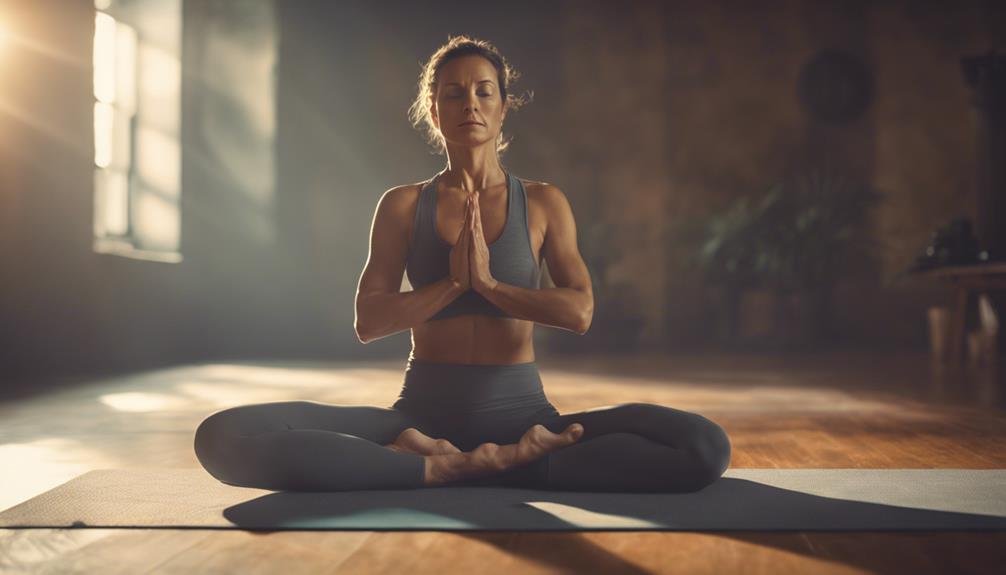
Building on the foundation of balance and focus established in eagle pose, we now engage our core muscles more deeply with navasana, a pose that strengthens our center and challenges our ability to stabilize and maintain balance. As we sit comfortably on the floor with our legs crossed, we draw our attention inward, cultivating a strong Core Connection. We engage our core muscles, feeling the energy radiate from our center, and lengthen our spine, creating a sense of expansion and openness.
With each breath, we deepen our Body Awareness, tuning into the subtle sensations in our body. We feel the gentle activation of our transverse abdominis, the deepest abdominal muscle, which wraps around our spine and pelvis, providing stability and support. As we balance on our seat bones, we develop greater control and precision, refining our ability to engage and release our core muscles. Navasana invites us to explore the nuances of our core strength, encouraging us to listen to our body's wisdom and trust our inner balance. By embracing this pose, we develop a stronger, more resilient core, and a deeper understanding of our body's innate wisdom.
Frequently Asked Questions
Can I Modify Yoga Poses if I Have a Pre-Existing Back Injury?
"We understand concerns about modifying yoga poses with a pre-existing back injury. We recommend exploring Back Modifications, like gentle twists or seated alternatives, and Injury Alternatives, such as child's pose or downward-facing dog, to maintain a safe and calming practice."
How Often Should I Practice Yoga to See Noticeable Core Strength Gains?
As we begin this yoga journey, we wonder, how often should we practice to witness tangible gains in core strength? The secret lies in consistent practice, finding our ideal frequency to release a stronger, more resilient us.
Are There Any Yoga Poses That Target the Lower Abs Specifically?
"We focus on poses that isolate the lower abs, as they're often the weakest link in our core engagement. We love boat pose, which effectively targets the lower abs, promoting a strong, stable core."
Can Yoga Help With Core Strength if I'm Overweight or Obese?
As we set out on this journey, a lotus blooming in the muddy waters of self-doubt, we find that yes, yoga can be a powerful tool for building core strength, even for those of us carrying extra weight; modified flows and gentle approaches can help us find balance and harmony within.
Do I Need to Warm up Before Starting Yoga Exercises for Core Strength?
We always start our morning routine by warming up, as cold muscles are more prone to injury. Before diving into yoga exercises, we take a few minutes to get our blood flowing, ensuring a safe and effective practice.
Conclusion
As we weave these poses into our practice, our core strength begins to radiate outward, like ripples on a serene lake, touching every aspect of our lives. We stand taller, move with greater ease, and find a sense of inner balance that permeates every breath. With each pose, we're not just building physical strength, but cultivating a deeper connection to our inner selves.