Don't miss our holiday offer - 20% OFF!

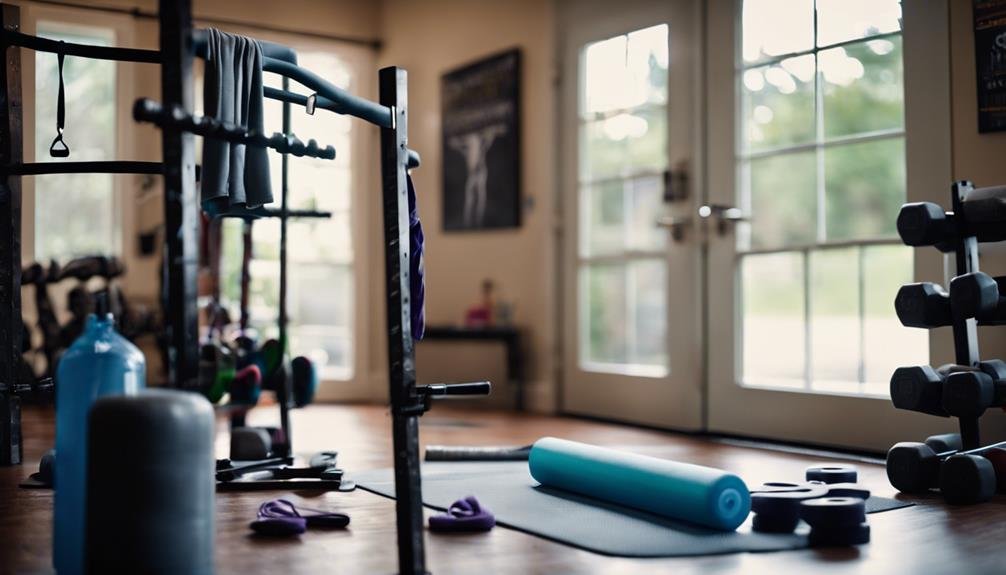
Making Your Own Fitness Equipment at Home
Liberate your fitness routine by discovering the limitless possibilities of DIY equipment, and unlock a world of effective home workouts.

We're taking control of our fitness journey by making our own equipment at home. By creating DIY dumbbells and repurposing household items, we're breaking free from expensive gym memberships and limited workout options. We can fill plastic bottles with sand or water to create makeshift dumbbells, and even use old socks as resistance bands. With a little creativity, our living rooms can become high-energy workout zones. And best of all, we can experiment with different grip variations and exercises that target specific muscle groups. Let's get started and discover a world of possibilities for our home workouts!
Key Takeaways
- Create DIY dumbbells by filling containers with filler weights like sand, water, or cement and attaching a handle for a customizable workout.
- Repurpose household items like water bottles, old socks, and towels to create makeshift fitness equipment for strength training and cardio exercises.
- Use creative resistance band options like old bicycle inner tubes, rubber hoses, or resistance tubing to add variety to workouts and save money.
- Utilize bodyweight exercises like planks, push-ups, and squats that engage muscles and promote resilience and injury prevention through controlled movements and proper form.
- Modify household items like stationary bikes or rowing machines to create cardio equipment alternatives, such as treadmill alternatives for high-intensity interval training (HIIT) circuits.
DIY Dumbbells for a Home Gym
We can create our own DIY dumbbells for a fraction of the cost of commercial ones, giving us the flexibility to customize our workouts and start building our home gym on a budget. By making our own dumbbells, we can choose the weight, material, and grip that suits our fitness goals and preferences. To get started, we can use filler weights, such as sand, water, or cement, to create the desired weight. We can then fill containers like plastic bottles, cans, or concrete molds with the filler weight, and attach a handle made of wood, metal, or plastic.
Another advantage of DIY dumbbells is the ability to experiment with different grip variations. We can create dumbbells with varying grip widths, textures, and shapes to target specific muscle groups and improve our grip strength. For instance, we can create a dumbbell with a thick grip to target our forearm muscles or a dumbbell with a thin grip to target our fingers and wrist. By creating our own DIY dumbbells, we can open up a world of possibilities for our home workouts and take our fitness journey to the next level.
Repurposing Household Items
Repurposing household items can be a creative and cost-effective way to build our home gym, allowing us to transform everyday objects into functional fitness equipment that challenges our bodies and sparks our imagination.
We've discovered that some of the most unlikely items can become valuable additions to our workout routine. Here are a few of our favorites:
- Water Bottle Weights: Fill up empty water bottles with sand or water to create makeshift dumbbells for strength training exercises.
- Old Sock Straps: Use sturdy old socks to create resistance bands for exercises like bicep curls and tricep extensions.
- Chair Squat Racks: Use a sturdy chair to create a makeshift squat rack for bodyweight exercises.
- Towel Rows: Use a towel to create a makeshift rowing machine, targeting our back and arm muscles.
Creative Resistance Band Options
With a little creativity, our closets, garages, and attics can yield a treasure trove of makeshift resistance bands that can add variety and challenge to our workouts. We can repurpose old bicycle inner tubes, rubber hoses, or even resistance tubing from an old physical therapy kit to create our own resistance bands. These makeshift bands can be used for banded yoga, adding an extra level of challenge to our downward-facing dogs and warrior poses. We can also use them for resistance rehab, helping us recover from injuries or surgery. For example, we can use a resistance band to rehabilitate a shoulder injury by performing shoulder rotations and extensions. By getting creative with our resistance band options, we can take our workouts to the next level and save money on expensive gym equipment. So, let's get creative and dig out those old items we thought were destined for the junkyard – our bodies (and our wallets) will thank us!
Homemade Cardio Equipment Ideas
By repurposing everyday items, we can create our own cardio equipment, turning our living rooms into high-intensity workout zones that get our hearts racing and calories burning. We're not limited to expensive gym memberships or fancy equipment; with a little creativity, we can create our own cardio machines at home.
Here are some of our favorite homemade cardio equipment ideas:
- Treadmill alternatives: Use a stationary bike or a rowing machine to get your heart rate up and burn calories. You can even use a staircase or a steep hill outside for a killer cardio workout.
- Jump rope modifications: Add some variety to your traditional jump rope routine by incorporating different footwork patterns, like double unders or side-to-side jumps.
- Create a high-intensity interval training (HIIT) circuit using household items like stairs, burpees, or jump squats.
- Use resistance bands to create a cardio-based workout, like banded runs or banded jumps.
With these DIY cardio equipment ideas, we can turn our living rooms into high-energy workout zones that get our hearts racing and calories burning. No more excuses – it's time to get moving!
Bodyweight Exercises for Strength
Building strength without equipment is a challenge we're keen to take on, and we're doing it with bodyweight exercises that engage our muscles and ignite our motivation. We're not just building strength, we're building resilience and injury prevention through controlled movements and proper form. Our core engagement is vital in exercises like planks, push-ups, and squats, which helps stabilize our bodies and prevent injuries.
We're focusing on compound exercises that work multiple muscle groups at once, maximizing our workout efficiency. Squats, lunges, and burpees are our go-to exercises for building strength in our legs, glutes, and core. We're also incorporating upper body exercises like push-ups, dips, and pull-ups to target our chest, shoulders, and back. By incorporating these exercises into our routine, we're seeing significant gains in strength and endurance. And the best part? We don't need any equipment to get started! With bodyweight exercises, we can work out anywhere, anytime, and that's a liberating feeling. So, let's get moving and build strength from the ground up!
Frequently Asked Questions
Can I Use Homemade Equipment for High-Intensity Workouts?
"We can definitely use homemade equipment for high-intensity workouts, even with space constraints, as it allows for creative workout variety and boosts our motivation to push harder and get fit!"
How Do I Clean and Maintain My Homemade Equipment?
"We debunk the myth that cleaning homemade gear is a hassle! We're sharing our top sanitizing protocols and storage tips to keep your DIY equipment in top shape, ensuring a safe and effective workout every time."
Are Homemade Equipment Options Suitable for Beginners?
"We find that homemade equipment options can be perfect for beginners, especially when dealing with space constraints or personal preference, as they offer a flexible and cost-effective way to kick-start our fitness journey."
Can I Customize Homemade Equipment for Specific Fitness Goals?
We've learned that tailoring our workouts to specific goals is key; just as a sculptor refines their masterpiece, we can customize homemade equipment to tackle specific fitness goals, tracking progress and varying our workouts for peak results.
Are Homemade Equipment Options More Cost-Effective in the Long Run?
"We've crunched the numbers, and yes, homemade equipment options can be more cost-effective in the long run. Our budget breakdown and longevity analysis reveal significant savings, making DIY fitness gear a smart investment for our wallets and bodies."
Conclusion
We've nailed the art of creating our own fitness equipment at home, and it's time to put our sweat equity to work! With DIY dumbbells, repurposed household items, and creative resistance band options, we're primed for strength training. Homemade cardio equipment ideas get our hearts racing, and bodyweight exercises flex our muscle. Now, let's harness this DIY momentum to fuel our fitness journey, pushing ourselves to new heights and celebrating every small victory along the way.