Don't miss our holiday offer - 20% OFF!

Easy Stretching Routines for Home Fitness Beginners
Improving flexibility and reducing pain is just a stretch away, but where do you start with a home stretching routine that actually works?

We're committing to a consistent home stretching routine, and it's about time: with regular stretching, we can boost our flexibility, reduce muscle tension, and even alleviate chronic pain, and the best part is that it's easier than we think! We'll start with simple neck and shoulder stretches to reduce tension, then move on to chest opening exercises to improve our posture. From there, we'll target our lower back, hips, and legs to reduce pain and improve our range of motion. With the right equipment and a little consistency, we'll be on our way to a stronger, more flexible us – let's get started and see where it takes us!
Key Takeaways
- Start with short, daily stretching sessions (10-15 minutes) to establish a consistent habit and reduce muscle tension.
- Invest in essential equipment like yoga mats, resistance bands, and blocks to ensure comfort and joint support.
- Focus on simple, beginner-friendly stretches for the neck, shoulders, and chest, such as chin tucks, shoulder rolls, and chest expansion exercises.
- Incorporate lower back, hip flexor, and leg stretches, like pelvic alignment exercises, knee to chest stretches, and seated twists, to improve flexibility and reduce muscle soreness.
- Create a dedicated home space for stretching, schedule it into your daily routine, and find a stretching buddy to maintain consistency and overcome challenges.
Benefits of Stretching for Beginners
As we set out on our stretching journey, let's first acknowledge the incredible benefits that await us, from increased flexibility and reduced muscle tension to enhanced athletic performance and a better overall sense of well-being. We're excited to experience these advantages firsthand!
One of the most significant benefits we can expect is flexibility gains. As we consistently practice stretching, our range of motion will improve, allowing us to move with greater ease and confidence. This increased flexibility will also reduce our risk of injury and enhance our overall athletic performance.
Another significant advantage of stretching is stress relief. We all know how debilitating stress can be, but through regular stretching, we can calm our minds and bodies, promoting a sense of relaxation and tranquility. By incorporating stretching into our daily routine, we'll be better equipped to handle life's challenges, feeling more centered and grounded.
Essential Stretching Equipment at Home
We're ready to take our stretching practice to the next level by setting up our home space with the right equipment, which will help us establish a consistent routine and make the most of our newfound commitment to flexibility and wellness.
Now that we've got our motivation in check, it's time to talk about the essential equipment we need to get started. Here are the must-haves for our home stretching practice:
- Yoga Mats: A good yoga mat provides grip, comfort, and support for our joints. It's essential for preventing slipping and falling, and it's a game-changer for our joints.
- Resistance Bands: Resistance bands are lightweight, portable, and versatile. They help improve flexibility, strength, and range of motion, making them a great addition to our stretching routine.
- Blocks and Straps: Blocks and straps help us modify poses, reduce strain on our joints, and increase our range of motion. They're perfect for beginners who need a little extra support.
- Comfortable Clothing: Wearing comfortable, stretchy clothing helps us move freely and focus on our stretching practice. It's all about feeling comfortable and confident in our own skin.
With these essentials in place, we're ready to take our stretching practice to the next level and reap all the benefits that come with it!
Simple Neck and Shoulder Stretches
Let's kick off our stretching routine with some simple yet effective neck and shoulder stretches that'll help loosen up tight muscles and leave us feeling relaxed and rejuvenated. Neck tension and poor shoulder alignment can lead to headaches, fatigue, and even affect our posture. By incorporating these easy stretches into our daily routine, we'll be saying goodbye to stiffness and hello to flexibility and comfort.
Here are three simple neck and shoulder stretches to get us started:
| Stretch | Instructions | Benefits |
|---|---|---|
| Chin Tucks | Stand or sit with good posture, look straight ahead, and tuck chin towards chest. Hold 30 seconds. | Reduces neck tension and improves posture |
| Shoulder Rolls | Roll shoulders forward and backward in a circular motion. Repeat 10 times. | Relaxes shoulders and improves alignment |
| Ear to Shoulder | Gently bring ear towards shoulder, keeping head straight. Hold 30 seconds and repeat on the other side. | Stretches neck and improves flexibility |
Easy Chest Opening Exercises
As we move forward with our stretching routine, let's focus on opening up our chests to improve our posture and reduce tension. We'll start with some simple exercises that'll help us do just that, including chest expansion exercises, shoulder rolls, and arm circles. By incorporating these easy moves into our daily routine, we'll be breathing easier and standing taller in no time!
Chest Expansion Exercises
By incorporating chest expansion exercises into our daily routine, we can improve our posture, increase oxygen intake, and even reduce stress and anxiety. As beginners, it's essential to start with simple yet effective exercises that target our chest muscles.
Let's focus on building Chest Awareness by increasing Thoracic Mobility. Here are some easy exercises to get us started:
- Doorway Stretch: Stand in a doorway with arms extended overhead, and lean forward until we feel a stretch in our chest.
- Chest Opener: Lie on our back with arms extended overhead, then slowly lift our arms up and down, squeezing our chest muscles.
- Arm Circles: Hold our arms straight out to the sides, then make small circles with our hands for 10-15 reps.
- Wall Push-Ups: Stand with our feet shoulder-width apart, then slowly lower our body toward the wall, keeping our elbows close to our body.
Shoulder Rolls Relaxation
We're now ready to move beyond chest expansion exercises and relax our shoulders with simple yet effective rolls that open up our chest and calm our entire upper body. It's time to unwind and release tension with shoulder rolls, a powerful relaxation technique that melts away stress and anxiety. By incorporating shoulder rolls into our daily routine, we can experience deep muscle relaxation, reducing muscle fatigue and improving our overall posture.
To get started, stand or sit comfortably with your arms at your sides. Roll your shoulders forward and up towards your ears, holding for a few seconds. Then, roll them back and down, releasing any tension. Repeat this motion several times, focusing on the sensation of relaxation spreading through your shoulders and chest. As we practice this exercise, we'll begin to notice a decrease in muscle tension and an increase in flexibility. By incorporating shoulder rolls into our daily routine, we'll be better equipped to tackle the demands of daily life with ease and confidence.
Arm Circles Flexibility
Let's move on to arm circles, a fantastic way to increase flexibility and openness in our chest, where we'll hold our arms straight out to the sides at shoulder height and make small circles with our hands. This exercise is a great way to loosen up our shoulders and improve our posture. By incorporating arm circles into our daily routine, we'll be able to increase our flexibility and reduce stiffness in our upper body.
Here are some tips to keep in mind:
- Start small: Begin with small circles and gradually increase the size as you loosen up.
- Breathe deeply: Take slow, deep breaths as you circle your arms to help relax your muscles.
- Focus on your shoulders: Keep your shoulders down and away from your ears to get the most out of this exercise.
- Make it a habit: Incorporate arm circles into your daily routine, whether it's during commercial breaks while watching TV or during your morning stretch.
Stretching for Lower Back Pain
Relieving lower back pain often starts with a simple yet powerful tool: stretching, which is why we're about to explore a series of exercises specifically designed to ease the discomfort and stiffness that's been holding us back. As beginners, understanding that lower back pain prevention starts with a solid foundation – and that's where pelvic alignment comes in. When our pelvis is in alignment, our entire lower back benefits, reducing tension and discomfort.
To achieve ideal pelvic alignment, we need to focus on stretching exercises that target our hip flexors, glutes, and lower back muscles. These stretches help to create a stable base, which is crucial for reducing pain and improving flexibility. Here are some essential stretches to get us started:
| Stretch | Targeted Muscle Group |
|---|---|
| Knee to Chest Stretch | Lower Back, Glutes |
| Piriformis Stretch | Glutes, Piriformis |
| Cat-Cow Stretch | Lower Back, Spine |
| Seated Twist | Lower Back, Obliques |
| Pelvic Tilt | Lower Back, Pelvis |
Quick Hip Flexor Stretches
By incorporating quick hip flexor stretches into our daily routine, we can significantly reduce lower back pain and improve our overall flexibility. It's no secret that tight hip flexors can wreak havoc on our posture, causing our lower back to ache and our hips to feel stiff. But with just a few minutes of stretching each day, we can start to notice a substantial difference.
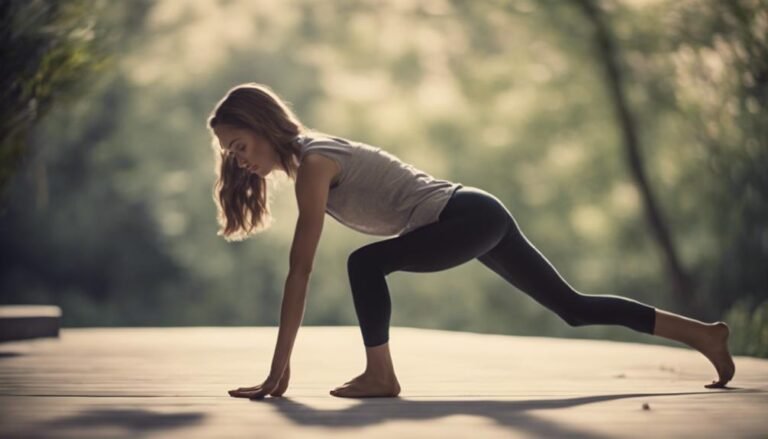
- Kneeling Hip Flexor Stretch: Start on our hands and knees, then bring one knee forward and place our foot flat on the ground in front of the other knee. Lean forward, stretching the front of our hip.
- Lying Hip Flexor Stretch: Lie on our back with our legs straight, then lift one leg up towards the ceiling, keeping our knee straight. Hold for 30 seconds and switch sides.
- Standing Hip Flexor Stretch: Stand with our feet hip-width apart, take a large step forward with one foot, and lower our body down into a lunge position. Lean forward, stretching the front of our hip.
- Piriformis Stretch: Sit on the floor with our affected leg crossed over our other leg. Place our hand on the knee of the crossed leg and pull it toward our opposite shoulder, stretching our hip and glutes.
Quad and Hamstring Stretching Routine
As we move on to the quad and hamstring stretching routine, we're excited to explore the benefits it can bring to our overall flexibility and athletic performance. We'll start by focusing on the quad focus stretch, which targets those powerful muscles in the front of our legs. By mastering this stretch and combining it with hamstring stretches, we'll be able to improve our range of motion and reduce our risk of injury.
Quad Focus Stretch
We're tackling tight quadriceps and hamstrings with the Quad Focus Stretch, a routine that's essential for anyone who's serious about improving their flexibility and range of motion. As beginners, it's often tough to prioritize stretching, but trust us, it's worth it! Weak quad strength can lead to muscle imbalance, causing poor posture, knee pain, and even injuries. By incorporating the Quad Focus Stretch into our routine, we can improve our overall athletic performance and reduce our risk of injury.
It's clear that
- Improves quad strength: Stronger quads mean better knee stability and reduced risk of injury.
- Reduces muscle imbalance: By stretching our quads, we can reduce muscle imbalance and alleviate knee pain.
- Increases flexibility: Regular stretching can increase our range of motion, making daily activities easier.
- Enhances athletic performance: Improved flexibility and strength can boost our overall athletic performance.
Hamstring Stretch Benefits
Now that we've tackled tight quadriceps, it's time to give our hamstrings the same attention, and for good reason – flexible hamstrings can make all the difference in our overall flexibility and athletic performance. It's a fact that tight hamstrings can lead to poor posture, lower back pain, and even injuries. But by incorporating hamstring stretches into our routine, we can experience the benefits of improved athletic performance and reduced muscle soreness.
Here are just a few of the benefits we can expect from regular hamstring stretching:
| Benefits | Description |
|---|---|
| Improved Athletic Performance | Increased power, speed, and agility |
| Reduced Muscle Soreness | Decreased DOMS (delayed onset muscle soreness) |
| Enhanced Flexibility | Increased range of motion and reduced stiffness |
Proper Stretching Techniques
Let's dive into the nitty-gritty of quad and hamstring stretching by mastering proper techniques that will take our flexibility to the next level. We're not just stretching for the sake of stretching; we're doing it to improve our overall fitness and well-being. To get the most out of our quad and hamstring stretching routine, we need to focus on proper techniques. Here are some key takeaways to keep in mind:
- Breathe deeply: Incorporate breathing exercises into our stretching routine to relax our muscles and increase flexibility.
- Activate our core: Engage our core muscles to stabilize our body and maintain proper form.
- Don't bounce: Avoid bouncing or jerking movements, which can cause injury and reduce the effectiveness of our stretch.
- Hold for 20-30 seconds: Hold each stretch for 20-30 seconds to allow our muscles to relax and lengthen.
Calf Stretching for Better Flexibility
As we stand and move throughout the day, our calf muscles work tirelessly to support our bodies, making calf stretching an essential component of overall flexibility and athletic performance. By incorporating calf stretches into our routine, we can improve our overall range of motion, reduce muscle soreness, and even prevent injuries.
To understand the importance of calf stretching, let's take a look at the anatomy involved. Our calf muscles consist of the gastrocnemius and soleus muscles, which connect to the Achilles tendon. This tendon is prone to strain and injury, making Achilles maintenance a key aspect of calf stretching.
Here are some key calf stretching exercises to get us started:
| Exercise | Description | Benefits |
|---|---|---|
| Wall Push-Up | Stand facing a wall with one hand on the wall and one foot back | Stretches gastrocnemius |
| Seated Calf Stretch | Sit on the floor with legs straight out in front | Stretches soleus |
| Calf Raises | Stand on the edge of a stair or step with heels hanging off | Strengthens calf muscles |
| Ankle Mobilization | Rotate ankles in circular motions | Improves ankle flexibility
Simple Ankle and Foot Stretches
Now that we've got our calves feeling loose and limber, let's move on to our ankles and feet! We're going to tackle two simple yet effective stretches that'll have us walking on sunshine in no time. We'll start with the Toe Curl Stretch and the Ankle Circle Exercise, and show our feet some much-needed love.
Toe Curl Stretch
We'll start by targeting the often-neglected muscles in our feet with the toe curl stretch, a simple yet effective exercise that can help alleviate foot pain and improve overall ankle mobility. As we focus on toe care, we're not just stretching our toes, we're also improving our foot mechanics. By incorporating this exercise into our daily routine, we can reduce the risk of common foot problems like plantar fasciitis and Achilles tendonitis.
Here's how to do it:
- Sit comfortably: Find a comfortable seated position with your feet flat on the floor.
- Curl your toes: Slowly curl your toes under, holding for 5-10 seconds.
- Release and repeat: Release your toes and repeat the process 10-15 times.
- Switch feet: Switch to your other foot and repeat the process.
Ankle Circle Exercise
Let's move on to the ankle circle exercise, a simple yet powerful stretch that helps loosen up stiff ankles and gets our feet ready for more intense activities. This exercise is a great way to improve ankle mobility, which is essential for maintaining good foot stability. We've all experienced that awkward moment when we twist our ankle or trip over our own feet – it's not fun! But with regular ankle circles, we can reduce our risk of injury and improve our overall balance and coordination.
To do the ankle circle exercise, start by sitting comfortably on the floor with your legs straight out in front of you. Lift one foot off the ground and draw circles with your toes, starting from small circles and gradually increasing in size. Repeat for 5-10 repetitions in both clockwise and counterclockwise directions. Switch feet and repeat. Remember to breathe naturally and don't bounce or force your ankle beyond a comfortable range of motion. By incorporating ankle circles into our daily routine, we'll be amazed at how much more stable and confident we feel in our daily activities.
Stretching for Improved Posture
By incorporating specific stretches into our daily routine, we can strengthen the muscles that support good posture, reducing the strain on our neck, back, and shoulders. This is especially important for those of us who spend hours hunched over computers or smartphones. By improving our posture, we can reduce the risk of chronic pain and even boost our mood and energy levels.
Here are some key stretches to focus on:
- Chest Stretch: Stand in a doorway with arms extended outward, stretching our chest and shoulders.
- Shoulder Rolls: Roll our shoulders forward and backward in a circular motion, loosening tension.
- Neck Stretch: Slowly tilt our head to the side, bringing our ear towards our shoulder.
- Core Engagement: Engage our core muscles by drawing our belly button towards our spine, promoting spinal alignment and stability.
Creating a Daily Stretching Habit
Now that we've identified the key stretches to improve our posture, it's time to make them a consistent part of our daily routine. We're not just talking about occasional stretching; we're talking about creating a daily habit that will transform our bodies and minds. So, where do we start?
Let's begin with our morning routine. As soon as we wake up, we can take 10-15 minutes to stretch our bodies. This sets the tone for the rest of the day and gets our blood flowing. We can start with some gentle neck stretches, move on to shoulder rolls, and finish with some hip openers. Consistency is key, so let's make stretching a non-negotiable part of our daily routine. Here are some consistency tips: schedule it in our calendars, find a stretching buddy, and mix it up to avoid boredom. By incorporating stretching into our daily routine, we'll be amazed at how quickly our bodies adapt and respond. So, let's make the commitment to ourselves to stretch daily and watch our posture, flexibility, and overall well-being improve dramatically.
Overcoming Common Stretching Challenges
As we commit to our daily stretching routine, we're likely to encounter obstacles that can derail our progress, from sore muscles to mental roadblocks, and it's essential we're prepared to overcome them. As beginners, we're more prone to fear factors that can hold us back, such as fear of injury or fear of not doing it "right." But we can't let these mental blocks stand in our way.
Here are some common challenges we might face, and how we can overcome them:
- Sore muscles: We'll experience muscle soreness, especially in the first few weeks. But this is a normal part of the process, and it means our bodies are adapting to the new movements.
- Lack of motivation: We'll have days when we don't feel like stretching. But we can't let one missed day turn into a week. We'll find a workout buddy or schedule our stretches in our calendars.
- Mental blocks: We'll doubt our abilities or fear we're not doing it correctly. But we'll focus on progress, not perfection, and celebrate small victories along the way.
- Inconsistency: We'll struggle to stick to our routine. But we'll start small, set achievable goals, and reward ourselves for milestones achieved.
Frequently Asked Questions
Can I Stretch if I Have a Prior Injury or Chronic Condition?
'We totally get it – prior injuries or chronic conditions can be a concern. But don't worry, we'll support you every step of the way! We'll show you modified exercises and gentle approaches that work for you, not against you.'
How Long Does It Take to See Results From Regular Stretching?
"We're not gonna sugarcoat it – seeing results from regular stretching takes time, folks! Consistency matters, so commit to a routine and don't skip a beat – ideally, 3-4 times a week – and we'll be flexing like pros in no time!"
Can I Stretch While Pregnant or After Giving Birth?
"We're excited to share that yes, we can stretch safely during pregnancy and postpartum with prenatal modifications and a focus on postpartum recovery, ensuring a healthy and empowered journey for our bodies and babies."
Do I Need to Warm up Before Stretching or After Exercise?
'We always prioritize a dynamic warm-up before stretching, as it sets our bodies up for success in our exercise flow. By doing so, we guarantee a seamless stretching timeline that complements our workout, not the other way around.'
Can I Stretch if I'm Overweight or Obese?
"We believe that everyone, regardless of weight, deserves to feel the benefits of stretching! With body positivity, we modify exercises to suit our needs, focusing on comfort and progress, not perfection."
Conclusion
As we wrap up our stretching journey, we've covered a lot of ground – and our bodies are now more flexible and ready to take on the day! Just like a garden that's been watered and nurtured, our muscles are now loosened up and ready to bloom. We've got the tools, the knowledge, and the confidence to make stretching a daily habit. So, let's keep stretching and growing, one flexibility-filled day at a time!