Don't miss our holiday offer - 20% OFF!
Beginner Pilates Routines for Home Fitness
Crafting a stronger, more mindful you starts with beginner-friendly Pilates routines tailored for home fitness, but that's just the beginning.

We're ready to transform our bodies and minds with beginner-friendly Pilates routines tailored for home fitness. First, we'll set up a dedicated space with a good-quality Pilates mat and an exercise ball. Then, we'll focus on building core strength, body awareness, and flexibility through foundational exercises. We'll learn how to engage our transverse abdominis muscle safely and effectively, and practice mindful movements to improve posture, balance, and overall stability. As we progress, we'll discover how Pilates can reduce back pain, increase flexibility, and promote relaxation. Let's take the first step towards a stronger, more mindful us – and see where this journey takes us.
Key Takeaways
- Start with a good-quality Pilates mat and an exercise ball to engage your core and improve posture.
- Focus on building core strength through exercises that target the transverse abdominis muscle.
- Practice mindful movement, engage your core, and maintain proper alignment to avoid unnecessary strain on muscles.
- Incorporate gentle contractions, deep breathing, and slow movements to build core strength safely and effectively.
- Begin with short, achievable routines and set specific goals for your practice to establish a consistent home fitness routine.
Getting Started With Pilates
As we begin our Pilates journey, let's start by understanding the basics of this low-impact exercise method that has been transforming bodies for nearly a century. Pilates history dates back to the early 20th century, founded by Joseph Pilates, a German fitness enthusiast. He believed that mental and physical well-being were interconnected, and his approach emphasized the importance of concentration, control, and flow. This mindful approach is still at the core of Pilates today.
As we set out on this fitness journey, grasping the fundamental principles of Pilates is crucial. We'll focus on developing strength, flexibility, and body awareness through a series of controlled movements that engage our core, improve our posture, and enhance our overall physical fitness. By adopting a mindful approach, we'll become more attuned to our bodies, increasing our self-awareness and ability to listen to our inner cues. By doing so, we'll be better equipped to modify exercises to suit our individual needs, ensuring a safe and effective workout. With patience, dedication, and a willingness to learn, we'll tap into the full potential of Pilates and experience the transformative power it has to offer.
Essential Equipment for Home Practice
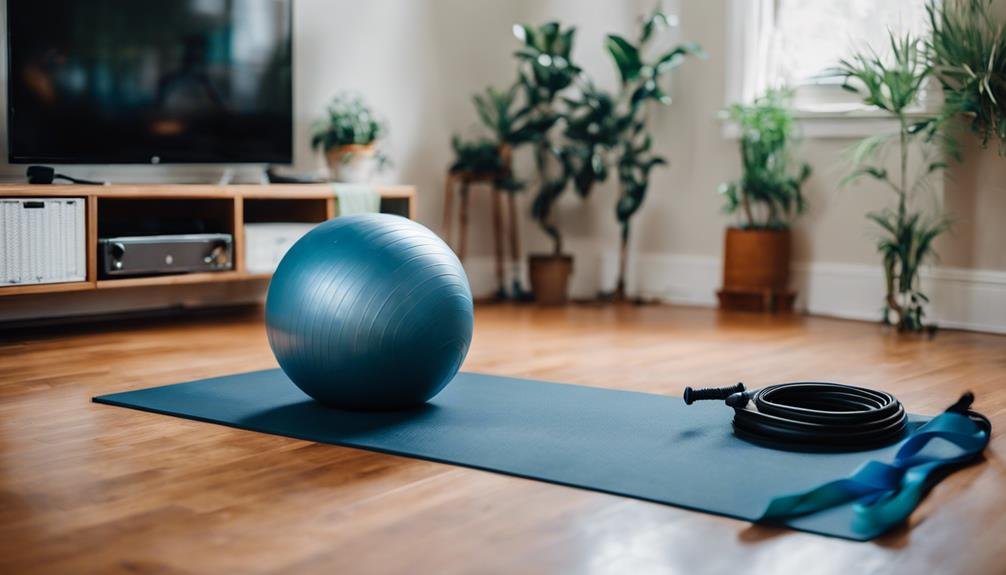
We're ready to take our Pilates practice to the next level by investing in a few key pieces of equipment that'll help us get the most out of our home workouts. As beginners, having the right tools is crucial to support our practice and prevent injuries. First and foremost, a good-quality Pilates mat is a must-have. This provides the necessary grip and cushioning to support our joints and spine during exercises. We recommend investing in a thick, high-density mat that can withstand regular use. Another vital piece of equipment is an exercise ball, also known as a Swiss ball. This versatile tool helps engage our core, improve our posture, and increase our flexibility. It's perfect for exercises that target our abs, back, and glutes. When choosing an exercise ball, make sure it's durable and the right size for our body type. With these two vital pieces of equipment, we'll be well on our way to a successful and enjoyable Pilates practice at home.
Foundational Exercises for Beginners
As we begin our Pilates journey, we'll focus on foundational exercises that lay the groundwork for a strong practice. We'll start by building our core strength, which is essential for maintaining good posture, balance, and overall stability. By developing our core strength and body awareness, we'll create a solid foundation for more advanced exercises to come.
Core Strength Builders
Building a strong core is essential for Pilates beginners, since it provides the foundation for more advanced exercises and helps improve overall body stability. We're not just talking about getting a six-pack, but rather building core endurance that will benefit our entire practice. A strong core provides the stability we need to perform exercises efficiently and effectively.
When we talk about core strength, we're referring to our ability to engage our transverse abdominis muscle, which is the deepest abdominal muscle that wraps around our spine and pelvis. This muscle is responsible for maintaining good posture, reducing back pain, and enhancing our overall athletic performance.
Here are three key benefits of building core strength in Pilates:
- Improved posture: By engaging our core, we can maintain a straight spine and avoid slouching, which reduces back and neck pain.
- Enhanced athletic performance: A strong core provides the stability we need to perform exercises efficiently and effectively, which enhances our overall athletic performance.
- Better abdominal control: Building core strength allows us to engage our abdominal muscles, which helps us maintain good posture and reduces our risk of injury.
Building Body Awareness
Our bodies are like instruments, and Pilates is the tuning process that helps us develop awareness of our physicality, allowing us to move with greater precision and control. As beginners, building body awareness is essential in laying the foundation for a strong Pilates practice. We start by focusing on mindful movement, paying attention to how our bodies respond to different exercises. This heightened awareness helps us identify areas of tension and imbalance, allowing us to make adjustments and improve our overall alignment.
Body scanning is another vital component of building body awareness. We take a few moments to lie down or sit comfortably, closing our eyes, and bringing our attention inward. We scan our bodies, starting from the crown of our heads, down to our toes, noticing areas of tension, relaxation, or sensation. This practice helps us develop a deeper understanding of our physicality, allowing us to move with greater intention and precision. By incorporating mindful movement and body scanning into our practice, we can improve our overall posture, reduce injury risk, and enhance our overall Pilates experience.
Building Core Strength Safely
We need to focus on engaging our transverse abdominis muscle, the deepest abdominal muscle that wraps around our spine and pelvis, to build core strength safely and effectively. This muscle is essential for maintaining proper alignment and stability in our exercises. When we engage our transverse abdominis, we're better able to support our spine and pelvis, reducing the risk of injury.
To engage our transverse abdominis safely, we need to:
- Start with gentle contractions: Begin by taking slow, deep breaths and contracting your transverse abdominis muscle on the exhale. Release on the inhale.
- Maintain mindful shifts: Move slowly and deliberately between exercises, avoiding jerky movements that can put unnecessary strain on your muscles.
- Focus on proper alignment: Keep your shoulders down and away from your ears, engage your core, and maintain a neutral spine.
Improving Flexibility and Mobility
As we focus on improving flexibility and mobility, we're excited to explore exercises that will increase our range of motion, enhance joint mobility, and reduce stiffness quickly. By incorporating Pilates routines into our daily routine, we'll be able to move more freely and easily, without the aches and pains that come with stiffness. By committing to regular practice, we can look forward to feeling more agile, flexible, and mobile in no time.
Increase Range of Motion
By incorporating Pilates exercises into our home fitness routine, we can substantially increase our range of motion, improving flexibility and mobility. As we age, our joints naturally lose lubrication, leading to stiffness and limited movement. However, with regular Pilates practice, we can reverse this trend and regain our natural range of motion.
Here are three key benefits of Pilates exercises that help increase our range of motion:
- Improved joint lubrication: Pilates exercises stimulate the production of synovial fluid, which helps to lubricate our joints, reducing friction and allowing for smoother movement.
- Increased flexibility: By incorporating mobility exercises into our Pilates routine, we can improve our flexibility, enabling us to move more freely and with greater ease.
- Enhanced muscle strength: Stronger muscles provide better support for our joints, allowing us to move with greater confidence and precision.
Enhance Joint Mobility
How can we achieve maximum joint mobility, allowing us to move freely and effortlessly in our daily lives? As we practice Pilates, we're not just strengthening our muscles, we're also taking care of our joints. Joint mobility is essential for fluid movement, and it all starts with proper joint lubrication. You see, our joints contain synovial fluid, a thick, clear liquid that reduces friction between the bones and allows for smooth movement. When we move, this fluid helps to lubricate our joints, making it easier to bend, twist, and stretch.
Through Pilates, we can improve joint mobility by increasing the range of motion in our joints. This, in turn, helps to stimulate the production of synovial fluid, keeping our joints healthy and well-lubricated. As we move through different Pilates exercises, we're not only strengthening our muscles but also improving the overall health of our joints. By incorporating Pilates into our fitness routine, we can enhance joint mobility, reducing stiffness and discomfort, and allowing us to move with ease and confidence.
Reduce Stiffness Quickly
We can reduce stiffness quickly by incorporating exercises that target specific areas of tension, allowing us to improve our flexibility and mobility. As beginners, we often overlook the importance of flexibility and mobility in our Pilates routine. However, incorporating exercises that target specific areas of tension can make a significant difference in reducing stiffness.
Here are three ways to reduce stiffness quickly:
- Morning Stretching: Start your day with some light stretching exercises to loosen up your muscles. Focus on your neck, shoulders, and back, as these areas tend to be the most prone to stiffness.
- Targeted Exercises: Incorporate exercises that target specific areas of tension, such as the neck stretch, shoulder rolls, and chest opens. These exercises can help reduce stiffness and improve flexibility.
- Nighttime Relaxation: End your day with some relaxation techniques, such as deep breathing, progressive muscle relaxation, or meditation. This can help reduce muscle tension and promote relaxation.
Pilates for Better Posture
Practicing Pilates regularly can substantially improve our posture by strengthening the core muscles that support our spine and promoting good alignment habits. As we commit to a consistent Pilates routine, we become more mindful of our daily habits and body language. We start to notice how we're sitting, standing, and moving throughout the day. We correct our slouching, roll our shoulders back, and engage our core muscles to maintain a tall, confident stance.
Reducing Back Pain With Pilates
As we explore Pilates routines for reducing back pain, we'll focus on three key areas that can make a significant difference. We'll start by looking at core strengthening exercises that can help stabilize our spines and alleviate discomfort. By incorporating spinal alignment techniques and pelvic floor engagement into our practice, we can work towards a stronger, healthier back.
Core Strengthening Exercises
By engaging our core muscles through targeted Pilates exercises, we can substantially reduce back pain and improve our overall posture and balance. As we strengthen our core, we'll experience a range of benefits, from improved athletic performance to enhanced daily functioning. One common misconception is that core strength is only important for athletes or gym enthusiasts, but the truth is, a strong core is essential for everyone.
Let's debunk some core myths:
- Myth: Core exercises are only for building six-pack abs. Reality: A strong core is about more than just aesthetics; it's about stability, balance, and overall well-being.
- Myth: Core exercises are only for athletes. Reality: Anyone can benefit from core strengthening exercises, regardless of fitness level or age.
- Myth: Core exercises are too intense or complicated. Reality: Pilates offers a range of accessible, low-impact exercises that can be modified to suit individual needs.
Spinal Alignment Techniques
We can substantially reduce back pain and improve our overall posture by focusing on spinal alignment techniques, which Pilates exercises can help us master. By incorporating mindful movement and proper posture into our daily routine, we can alleviate back pain and improve our overall well-being.
Here's a breakdown of how Pilates can help:
| Pilates Exercise | Spinal Alignment Benefit |
|---|---|
| Chest Expansion | Opens up the chest, improving posture and reducing strain on the upper back |
| Shoulder Bridge | Strengthens core and improves spinal alignment, reducing back pain |
| Cat-Cow Stretch | Increases flexibility and reduces tension in the spine |
| Plank | Strengthens core and improves posture, reducing strain on the lower back |
Pelvic Floor Engagement
Engaging our pelvic floor muscles is an often-overlooked yet essential component in reducing back pain and improving overall core stability through Pilates exercises. As we focus on strengthening our core, we often neglect the pelvic floor, which plays a vital role in supporting our lower back and pelvis. By engaging our pelvic floor, we can reduce back pain and improve our overall posture.
To engage our pelvic floor, we can practice Kegel exercises, which involve contracting and releasing the muscles as if we're stopping the flow of urine. This simple exercise can provide menstrual relief and improve bladder control. Here are some benefits of incorporating pelvic floor engagement into our Pilates routine:
- Improved core stability: Engaging our pelvic floor helps stabilize our core, reducing the strain on our lower back.
- Reduced back pain: By strengthening our pelvic floor, we can reduce back pain and improve our overall posture.
- Menstrual relief: Kegel exercises can help alleviate menstrual cramps and discomfort.
Beginner-Friendly Mat Workout
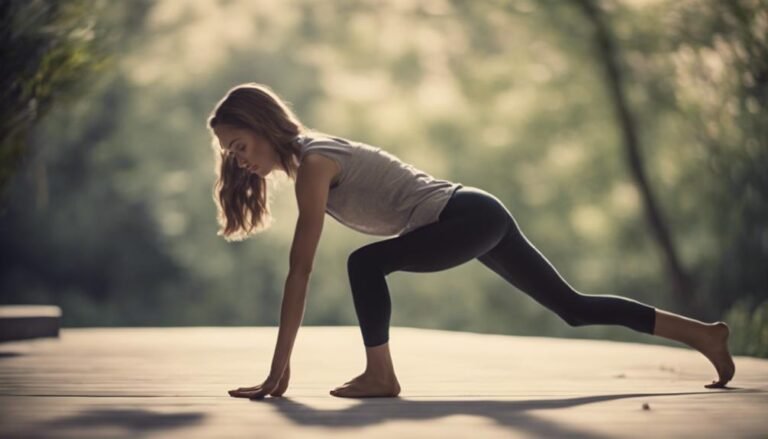
Let's get started with a beginner-friendly mat workout that targets core strength, flexibility, and body control, perfect for those new to Pilates. We'll focus on mat variations that engage our core, improve our posture, and increase our flexibility. To begin, we'll start with a gentle warm-up, followed by a series of exercises that target our core muscles, including the hundred, teaser, and single-leg stretch.
As we progress, we'll incorporate more dynamic movements, such as the rolling like a ball and the side bends. These exercises will help improve our flexibility, balance, and overall body control. To keep things engaging, we can create a workout playlist with calming music that complements our Pilates practice. This will help us stay focused and motivated throughout our workout. By incorporating these exercises and variations into our routine, we'll be able to develop a strong foundation in Pilates and enjoy the numerous benefits it has to offer.
Flowing Movements for Coordination
As we've established a strong foundation in core strength and flexibility, now it's time to integrate flowing movements that challenge our coordination and overall body awareness. We're not just focusing on individual exercises, but rather how we flow between them. This is where the magic of Pilates comes alive – in the dynamic connections that create a sense of musical expression.
To master these flowing movements, we need to focus on:
- Control: We need to be able to control our movements, slowing down or speeding up as needed.
- Sequencing: We need to think about the order in which we perform exercises, creating a seamless link from one to the next.
- Breath awareness: We need to be mindful of our breath, using it to guide our movements and create a sense of fluidity.
Breathing Techniques for Relaxation
We've all experienced moments of tension and stress, and that's where Pilates breathing techniques come in – to help us relax and unwind. By incorporating mindful breathing exercises into our Pilates practice, we can calm our minds and soothe our bodies.
| Breathing Technique | Benefits |
|---|---|
| Deep Diaphragmatic Breathing | Reduces anxiety and promotes relaxation |
| Mindful Exhales | Slows down heart rate and calms the nervous system |
| Box Breathing | Improves focus and concentration |
| 4-7-8 Breathing | Lowers blood pressure and promotes calmness |
| Calming Rhythms | Enhances overall sense of well-being |
Creating a Home Practice Routine
To establish a consistent and effective Pilates practice, we'll start by setting up a dedicated space in our home, free from distractions and interruptions. This will help us stay focused and committed to our practice. Next, we'll set specific, achievable goals for ourselves, whether it's to practice three times a week or to master a certain exercise. Having clear goals in mind will help us stay motivated and track our progress.
To make our practice a habit, we'll create a schedule that works for us. This might mean practicing at the same time every day or setting aside a specific day each week. Consistency is key to seeing results and making progress.
Here are three tips to help us stick to our schedule:
- Start small: Begin with short, manageable sessions and gradually increase the duration and frequency as we become more comfortable.
- Make it a habit: Try to practice at the same time every day or week, so it becomes an automatic part of our routine.
- Track our progress: Keep a journal or use a tracking app to monitor our progress, identify areas for improvement, and stay motivated.
Frequently Asked Questions
Can I Modify Pilates Exercises to Accommodate My Physical Limitations?
"We can definitely modify Pilates exercises to accommodate our physical limitations. By using accessible props like blocks, straps, or a wall for support, we can prevent injuries and make exercises more manageable, allowing us to work within our comfort zones."
How Often Should I Practice Pilates to See Noticeable Results?
We find that practicing Pilates 2-3 times a week yields noticeable results, as consistency matters; to avoid plateaus, we incorporate progressive overload by gradually increasing intensity or difficulty to challenge ourselves and see continued improvement.
Can Pilates Help With Weight Loss or Is It Just for Flexibility?
We're curious about Pilates' impact on weight loss, and the science says it can help! While it's not a high-calorie burner, Pilates can contribute to weight loss by building muscle, increasing metabolism, and improving overall body composition, making it a valuable addition to our fitness routine.
Do I Need to Be Flexible to Start Practicing Pilates?
"We don't need to be flexible to start practicing Pilates; it's a mind-body exercise that focuses on core strength, control, and precision, which can actually help increase flexibility and balance over time."
Can I Practice Pilates While Pregnant or After Giving Birth?
As we navigate the waters of pregnancy and motherhood, we find that practicing Pilates can be a lifesaver, with prenatal modifications ensuring a safe journey, and postpartum recovery accelerated by gentle, controlled movements.
Conclusion
As we close the door on our Pilates journey, imagine a garden within us, where seeds of strength, flexibility, and balance have been sown. With each exercise, we've watered and nurtured our bodies, allowing them to bloom into a vibrant, healthy whole. Like a garden, our practice requires attention, patience, and dedication, but the harvest is well worth the effort. Now, go forth, tend to your inner garden, and watch it flourish.