Don't miss our holiday offer - 20% OFF!

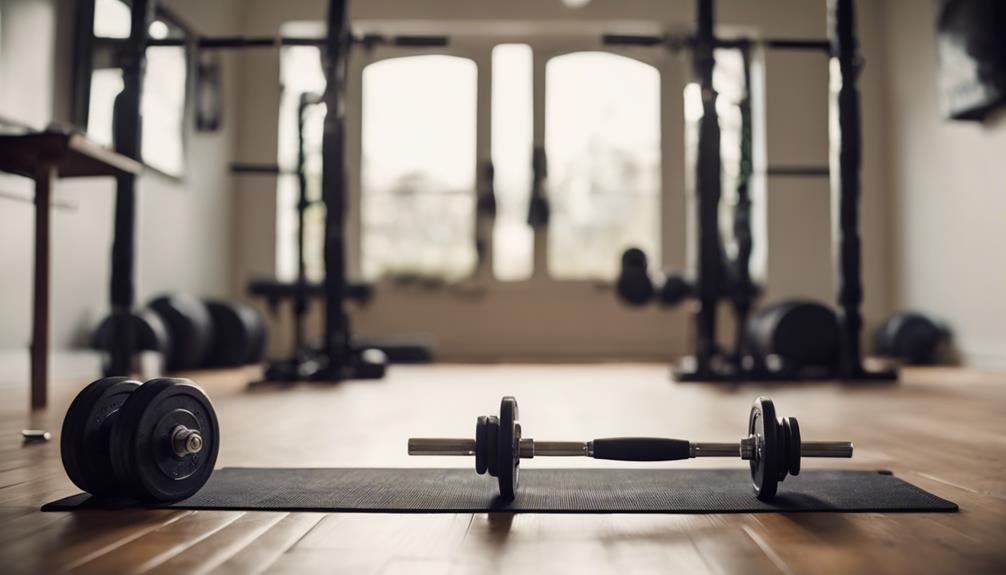
Barbell Workouts for Home Strength Training
Achieve powerful results with barbell workouts for home strength training, but first, learn how to do it safely and effectively.

We're ditching the gym membership and building strength and fitness at home with the mighty barbell, a versatile tool for building strength and muscle mass. With barbell training, we're improving bone density, boosting metabolism, and enhancing athletic performance while reducing injury risk. We're mastering essential exercises like squats, deadlifts, and bench presses, and targeting upper body, lower body, and core muscles. By incorporating progressive overload techniques and prioritizing safety and form, we're on our way to achieving our strength training goals. Now, let's get started and uncover the full potential of barbell workouts for home strength training.
Key Takeaways
- Implement a full-body workout routine with exercises like squats, deadlifts, and bench press to improve overall strength and muscle mass.
- Incorporate progressive overload techniques, such as gradual weight increases and rep range variation, to avoid plateaus and ensure continuous progress.
- Focus on compound exercises that target multiple muscle groups at once, such as the squat and deadlift, to optimize workout efficiency and effectiveness.
- Prioritize proper form and safety when performing barbell exercises to prevent injuries and ensure long-term progress.
- Create a well-structured workout routine with specific goals, scheduling, and logging to stay motivated and track progress in home strength training.
Benefits of Barbell Training
By incorporating barbell training into our fitness routines, we can experience a multitude of benefits that extend far beyond just building brute strength. One of the most significant advantages is improved bone density. As we age, our bones naturally lose density, making us more prone to osteoporosis and fractures. Resistance training with barbells helps stimulate bone growth, increasing our overall bone density and reducing the risk of bone-related injuries.
Another benefit of barbell training is an increased metabolism. When we build muscle mass through strength training, our resting metabolic rate increases, helping us burn more calories at rest. This means we'll burn more calories even when we're not actively exercising, making it easier to lose weight and maintain weight loss over time. Additionally, barbell training can improve our overall athletic performance, boost our confidence, and enhance our mental well-being. By incorporating barbell exercises into our fitness routines, we can experience a wide range of benefits that go beyond just physical strength.
Essential Barbell Exercises
Now that we've explored the benefits of incorporating barbell training into our fitness routines, let's take a closer look at the exercises that will help us achieve these benefits, starting with the most effective and efficient ones. When it comes to building strength and muscle mass, mastering the Barbell Fundamentals is vital. These exercises form the foundation of any effective strength training program and are key for making progress.
The squat, deadlift, bench press, and overhead press are the cornerstones of barbell training. These exercises work multiple muscle groups simultaneously, making them incredibly efficient and effective. As we progress in our fitness journey, we can evolve these exercises to continue challenging ourselves. This Exercise Evolution is key to avoiding plateaus and ensuring continuous progress.
Building a Home Gym
As we've mastered the Barbell Fundamentals, we're ready to take our training to the next level by creating a dedicated space that allows us to work out efficiently and effectively: our very own home gym. Building a home gym is more than just throwing some equipment together; it's about creating a space that motivates and inspires us to push ourselves harder. That's why we need to weigh the importance of Gym Aesthetics when designing our space. We want our gym to look and feel inviting, with a layout that flows smoothly and makes the most of our available space.
To optimize our Space Optimization, we should start by mapping out our floor plan. Identify the areas where we'll need the most space, such as where our barbell will live, and plan accordingly. Consider investing in multi-functional equipment that serves more than one purpose, like an adjustable bench press or a squat rack with storage. By being intentional with our design, we can create a home gym that not only looks amazing but also helps us achieve our fitness goals. With a little creativity and planning, we can turn any spare room into a state-of-the-art training facility that gets us pumped to work out every day.
Barbell Safety and Form
We've invested in our home gym and mastered the barbell fundamentals, but equally important is prioritizing barbell safety and form to avoid injuries and get the most out of our workouts. As we lift, we need to be mindful of our surroundings and respect the space around us. That's where barbell etiquette comes in – being aware of our body language and verbal cues is vital to avoid intimidating others or making them feel uncomfortable. Good gym psychology dictates that we keep our cool, even when we're pushing ourselves to new heights. A clear mind and focused attitude will help us maintain proper form, which is vital for effective and injury-free lifting. When we prioritize form over ego, we'll be able to lift heavier weights safely and efficiently. By being mindful of our body positioning, grip, and movement patterns, we'll be able to maximize our gains while minimizing the risk of injury. By mastering barbell safety and form, we'll be able to take our workouts to the next level and achieve our strength training goals.
Creating a Workout Routine
With a solid foundation in barbell safety and form, we're ready to create a workout routine that targets our specific strength training goals. Now, it's time to set specific, measurable, and achievable goals. What do we want to accomplish through our workout routine? Do we want to increase our squat max or boost our overall strength?
Once we've set our goals, we need to schedule our workouts. Life can get in the way, and scheduling conflicts are inevitable. But, with a clear plan, we can avoid missed workouts and stay on track. We recommend dedicating a specific time and day for our workouts, and sticking to it.
| Workout Day | Workout Details |
|---|---|
| Monday | Squats and Deadlifts |
| Wednesday | Bench Press and Rows |
| Friday | Leg Press and Lunges |
| Sunday | Rest Day |
| Tuesday/Thursday | Cardio and Abs |
To track our progress, we'll use workout journaling to log our exercises, sets, reps, and weight lifted. Consistency is key, and by forming good habits, we'll be on our way to achieving our strength training goals.
Upper Body Barbell Exercises
Six essential upper body barbell exercises will be covered in this section, each targeting specific muscle groups to help us build a strong and balanced physique. As we explore these exercises, we'll focus on improving our overall upper body strength and development.
First up, we have the Shoulder Press, a compound exercise that targets our deltoids and trapezius muscles. This exercise is a great way to build overall shoulder strength and stability. To perform the Shoulder Press, we'll stand with our feet shoulder-width apart, grip the barbell with our hands slightly wider than shoulder-width, and press the weight straight up over our heads.
Next, we have Tricep Extensions, an isolation exercise that targets our triceps. This exercise is essential for building strong, toned arms. To perform Tricep Extensions, we'll hold the barbell with an overhand grip, extend our arms fully, and then lower the weight behind our heads, keeping our upper arms still.
Lower Body Barbell Exercises
Moving on to our lower body, we're going to focus on building powerful legs and glutes with these essential barbell exercises that target our quadriceps, hamstrings, and gluteal muscles. For glute development, we recommend the barbell back squat and deadlift. These compound exercises work multiple muscle groups simultaneously, allowing us to lift heavier weights and see faster results. The barbell back squat, in particular, is excellent for building strength and power in our legs and glutes.
Additionally, we can't ignore the importance of calf strength. Weak calf muscles can lead to poor ankle mobility and increase our risk of injury. To target our calf muscles, we can add barbell calf raises to our routine. This exercise is simple yet effective, and can be done with a variety of foot positions to target different muscle fibers. By incorporating these exercises into our barbell workout routine, we'll be well on our way to building strong, powerful legs that will support us in all our fitness endeavors.
Core Strengthening Exercises
Now that we've built a strong foundation with our lower body exercises, we're ready to engage our core muscles to improve our overall athletic performance and stability. A strong core is essential for maintaining good posture, generating power, and preventing injuries. In this section, we'll explore some effective core strengthening exercises to add to our home strength training routine.
| Exercise | Description | Sets/Reps |
|---|---|---|
| Plank | Hold a steady position, engaging core muscles | 3-4 sets, 30-60 seconds |
| Russian twists | Rotate torso, targeting obliques | 3 sets, 12-15 reps |
| Leg raises | Lift legs, engaging lower abs | 3 sets, 12-15 reps |
| Pallof press | Press a weight, targeting rotational strength | 3 sets, 12-15 reps |
These exercises will help improve our core stability, which is vital for maintaining proper form and generating power in our barbell workouts. We'll focus on plank variations, which will help us build endurance and engage our core muscles. By incorporating these exercises into our routine, we'll see improvements in our overall athletic performance and reduce our risk of injury.
Progressive Overload Techniques
As we explore progressive overload techniques, we're going to focus on three key strategies to take our barbell workouts to the next level. We'll discuss how to push ourselves to muscle failure targets, implement gradual weight increases to challenge our bodies, and vary our rep ranges to keep our muscles guessing. By incorporating these techniques, we'll be able to consistently challenge ourselves and see measurable gains in strength and muscle mass.
Muscle Failure Targets
We regularly push our muscles to the brink of exhaustion through muscle failure targets, a crucial component of progressive overload techniques that helps us break through plateaus and achieve consistent gains. By targeting muscle failure, we're not just working out – we're actively causing micro-tears in our muscles, leading to muscle damage. This damage is the catalyst for growth, as our bodies repair and rebuild muscle tissue to adapt to the demands we're placing on it. But it's not just about damage – we're also inducing maximal fatigue, exhausting our muscles to the point where they can't perform another rep. This is where the magic happens, as our bodies are forced to adapt to the intense stress we're placing on them. By consistently pushing ourselves to muscle failure, we're ensuring that our muscles are always under a state of progressive overload, driving growth and strength gains. It's a challenging approach, but one that yields incredible results for those willing to put in the work.
Gradual Weight Increase
By incrementally cranking up the weight, we're able to keep our muscles guessing, forcing them to adapt to the ever-increasing demands we're placing on them. This gradual weight increase is a key component of progressive overload techniques, which are essential for continued strength gains. One effective way to implement this is through a micro loading strategy, where we add small increments of weight to our lifts over time. This approach helps us avoid weight plateaus, where we're stuck lifting the same weight for weeks on end without seeing any progress. By consistently challenging ourselves with heavier weights, we're able to stimulate continued muscle growth and strength increases. It's not about trying to lift as heavy as possible, but rather about making gradual, sustainable progress over time. By doing so, we can guarantee that our workouts remain engaging, challenging, and effective in the long run.
Rep Range Variation
To take our progressive overload techniques to the next level, we're going to mix up our rep ranges to keep our muscles guessing and prevent plateaus. By incorporating different rep ranges into our workouts, we'll be able to target different muscle fibers and avoid adaptation.
Here are a few ways we can vary our rep ranges to achieve different training goals:
- Power Endurance: 12-15 reps to improve our ability to sustain power over time
- Hypertrophy Focus: 8-10 reps to build muscle size and strength
- Strength Focus: 3-5 reps to develop maximum strength and power
Frequently Asked Questions
Can I Use a Barbell if I Have a Small Home Gym Space?
"We totally get it – space is limited! But, yes, we can still use a barbell in our small home gym space if we opt for space-saver, compact designs that maximize our workout area."
Do I Need to Purchase Multiple Barbells for Different Exercises?
"We don't need multiple barbells for different exercises; a single adjustable barbell that offers a variety of weight ranges can suffice, saving space and money, while still providing a great workout with a range of barbell exercises."
Can I Use a Barbell for Cardio Exercises Like Running or Cycling?
"Oh, please, who tries to sprint with a barbell? We can't imagine lugging a Cardio Barbell while running or cycling – it's absurd! Instead, we focus on Aerobic Weightlifting exercises that get our hearts racing, not our feet pounding the pavement."
Are Barbells Suitable for All Fitness Levels and Ages?
We think barbells can be suitable for most fitness levels and ages, but we caution that muscle imbalance can occur if proper form isn't maintained, and there's no specific age limit, but seniors may need modifications.
Can I Use a Barbell if I Have a Pre-Existing Injury or Health Condition?
We consult our doctors, get health clearance, and focus on injury modifications to guarantee safe lifting, prioritizing rehabilitation over intensity, and always obtaining doctor approval before using a barbell with a pre-existing condition.
Conclusion
As we wrap up our journey into the world of barbell workouts, we're left with a burning question: what's holding you back from tapping into your strength? With the essentials of barbell training, exercises, and safety under our belts, we're ready to forge a stronger, more resilient us. So, let the iron whisper its sweet nothings, and let's get lifting – the only way to get stronger is to start. The weight is ours to wield; the gains are ours to claim.