Don't miss our holiday offer - 20% OFF!

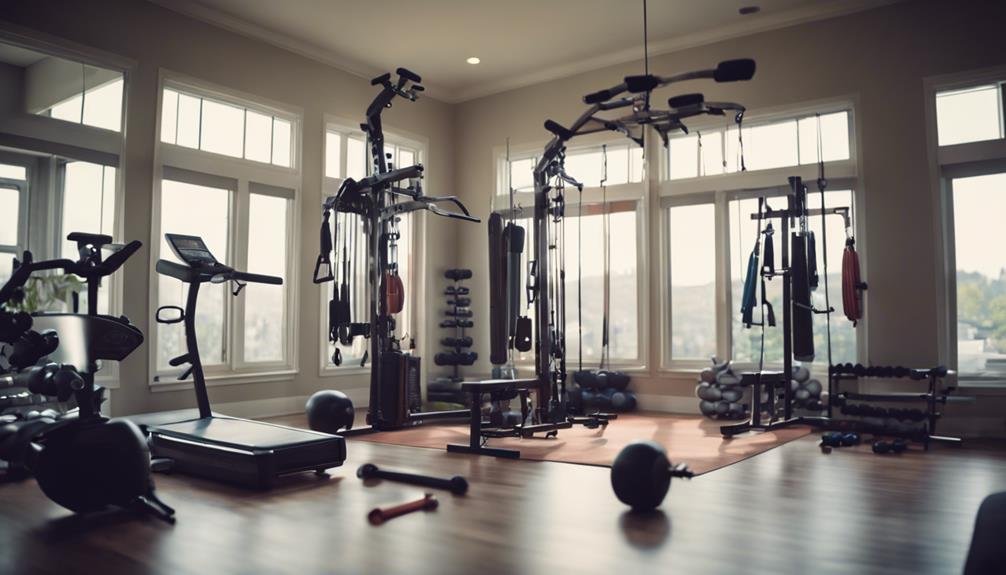
Designing a Cost-Effective Home Gym Layout
Learn how to optimize your space and budget to create a functional home gym that meets your fitness needs without breaking the bank.

We're creating a cost-effective home gym by evaluating our available space, choosing essential equipment, and maximizing corner spaces and vertical areas to provide a functional and efficient workout area. We evaluate room dimensions, doorways, and obstacles to design a functional and efficient workout space. By selecting compact, space-saving options and utilizing wall-mounted equipment, we're able to stay committed to our fitness goals without breaking the bank. With a well-planned layout, we're able to prioritize our fitness needs and stay on track. Now, let's get started on designing a home gym that meets our needs and fits our budget.
Key Takeaways
- Evaluate room dimensions and obstacles to design a functional and efficient workout area, ensuring enough space to move around comfortably.
- Select compact, space-saving equipment like resistance bands or a pull-up bar to optimize limited space and reduce costs.
- Utilize vertical space by installing drop-down storage units, high shelving units, and overhead racks to store equipment and supplies.
- Prioritize budget-friendly equipment options like foldable benches, adjustable desks, and resistance bands that deliver an effective workout.
- Create a well-planned and functional home gym that meets fitness needs and goals, while keeping costs low and staying committed to the fitness journey.
Assessing Your Available Space
We start by evaluating our available space, considering the dimensions of the room, doorways, and any obstacles that may impact our home gym's layout. This is essential in designing a functional and efficient workout area. We need to take precise measurements to identify any measuring constraints that could limit our equipment choices or workout routines. By doing so, we'll have a clear understanding of the space we're working with.
Spatial awareness is key in this initial assessment. We must think about the flow of our workout space, ensuring there's enough room to move around comfortably between equipment and that we can safely perform exercises without bumping into walls or other obstacles. We should also consider the location of windows, outlets, and any other features that might affect our gym's layout. By carefully evaluating our space, we can create a well-planned and functional home gym that meets our fitness needs and goals.
Choosing Essential Equipment
With our space assessed, it's time to select the essential equipment that will help us achieve our fitness goals. When choosing equipment, we need to think carefully about our personal preferences and workout goals. Are we looking to build strength, increase flexibility, or boost cardiovascular endurance? Do we prefer free weights, machines, or bodyweight exercises? Answering these questions will help us prioritize our equipment needs.
For strength training, we may opt for a adjustable dumbbell set, a compact weight bench, or a multi-functional home gym system. For cardio, a folding treadmill, exercise bike, or rowing machine could be a great addition. If we're short on space, we might look into compact, space-saving options like resistance bands or a pull-up bar. Whatever our choices, we should verify they align with our workout goals and personal preferences. By selecting the right equipment, we'll be more motivated to work out regularly and stay committed to our fitness journey.
Maximizing Corner Spaces
One often-overlooked area in home gym design is the corner space, which can be efficiently utilized with clever equipment placement and storage solutions. We often find ourselves struggling to fit all our equipment in a small space, but by maximizing our corner spaces, we can create a more functional and efficient home gym.
Here are a few ways to make the most of our corner spaces:
- Install corner shelves: These are great for storing smaller equipment like dumbbells, resistance bands, or exercise balls. By keeping them off the floor, we can create a more open and spacious feel in our gym.
- Use space savers: Consider investing in space-saving equipment like foldable exercise bikes or compact treadmills. These take up less floor space, allowing us to make the most of our corners.
- Opt for corner-friendly equipment: Choose equipment that is specifically designed to fit snugly into corners, such as corner benches or corner-mounted pull-up bars.
Creating a Functional Flow
As we step into our home gym, a well-planned layout is essential to creating a seamless workout experience. We want to make certain that our space is functional, efficient, and easy to navigate. To achieve this, we need to think about the traffic pattern in our gym. We should aim to create a clear path that allows us to move effortlessly between different workout zones.
By dividing our gym into distinct zones, we can create a logical flow that guides our workout routine. For example, we might have a cardio zone with treadmills and stationary bikes, a strength training zone with free weights and machines, and a flexibility zone with mats and stretching equipment. By grouping similar activities together, we can reduce clutter and make the most of our space.
A well-designed traffic pattern also helps to prevent congestion and accidents. We should consider the flow of traffic and guarantee that our equipment is spaced far enough apart to accommodate multiple users. By creating a functional flow, we can optimize our workout experience, reduce distractions, and achieve our fitness goals more efficiently.
Budget-Friendly Equipment Options
When we're designing a home gym on a budget, we need to prioritize space-saving and affordable options that still deliver an effective workout. We'll explore the must-have fitness essentials that won't break the bank, as well as compact machines and stations that maximize our exercise routine. By choosing the right budget-friendly equipment, we can create a functional and efficient home gym that meets our fitness goals without sacrificing our wallet.
Space-Saving Fitness Essentials
We can get a great workout in a small space with the right budget-friendly equipment, and compact options that serve multiple purposes are a great place to start. When designing our home gym, we want to make the most of our available space. That's why we're focusing on space-saving fitness essentials that won't break the bank.
Here are some of our top picks:
- Foldable Benches: These versatile benches can be easily stowed away when not in use, making them perfect for small spaces. Plus, they often come with adjustable heights and angles, allowing us to target different muscle groups.
- Adjustable Desks: Why not kill two birds with one stone? Adjustable desks can serve as a workspace and a fitness station. We can use them for desk exercises like push-ups and dips, and then adjust the height for a comfortable workspace.
- Resistance Bands: These lightweight, compact bands are a great alternative to bulky weight machines. They're easy to store and can provide a full-body workout.
Affordable Home Gym Machines
Now that we've optimized our space with multi-functional equipment, it's time to explore budget-friendly machine options that'll help us achieve our fitness goals without breaking the bank. When it comes to affordable home gym machines, we need to prioritize durability and reliability. Look for machines with an inclusive gym warranty that covers parts and labor for at least a year. This will give us peace of mind and protect our investment.
We should also consider the machine's build quality and material to guarantee it can withstand regular use. Avoid machines with flimsy frames or cheap plastics that may lead to machine deterioration over time. Instead, opt for machines with sturdy frames, heavy-duty steel, and high-quality components. This will confirm our machines remain in top condition, even with frequent use.
Compact Workout Stations
Compact workout stations, such as foldable benches and space-saving towers, offer an excellent way to maximize our home gym's functionality without sacrificing valuable floor space. These compact stations enable us to perform a variety of exercises, from strength training to cardio, in a small footprint. We can opt for portable benches that can be folded and stored away when not in use, saving us valuable floor space. Space-efficient mirrors can also be installed to provide a full-body view, allowing us to correct our form and technique.
Here are three benefits of incorporating compact workout stations into our home gym design:
- Space-saving design: Compact workout stations are designed to occupy minimal space, making them perfect for small home gyms.
- Versatility: These stations often come with multiple exercise options, allowing us to perform a variety of exercises in a small area.
- Cost-effective: Compact workout stations are often more affordable than larger, more complex machines, making them a budget-friendly option for our home gym.
Utilizing Vertical Space
As we design our home gym, we're going to make the most of our space by utilizing vertical space effectively. We'll start by maximizing our ceiling height, installing equipment that takes advantage of those often-wasted overhead inches. By optimizing our wall space as well, we'll create a functional and efficient workout area that makes the most of our available room.
Maximizing Ceiling Height
How can we make the most of our ceiling height when designing a home gym, ensuring we're not wasting a single inch of vertical space? We want to create a functional and efficient workout area that takes advantage of every available inch.
To maximize our ceiling height, we'll focus on utilizing vertical space by incorporating storage solutions that make the most of our gym's vertical real estate. Here are some strategies we'll explore:
- Drop Down Storage: Install drop-down storage units that can be pulled down when needed, providing easy access to equipment and supplies without taking up valuable floor space.
- High Shelving: Incorporate high shelving units to store less frequently used items, keeping them out of the way but still accessible.
- Overhead Racks: Utilize overhead racks to store items like resistance bands, jump ropes, or even bikes, keeping them organized and freeing up floor space for more essential equipment.
Optimizing Wall Space
By incorporating wall-mounted equipment and storage solutions, we can reclaim valuable floor space and create a more efficient workout area, allowing us to focus on our fitness goals without the clutter. This is especially important in smaller home gyms where every inch counts. To optimize our wall space, we'll need to choose the right equipment and accessories. Look for foldable options like wall-mounted folding benches or adjustable dumbbells that can be securely fastened to the wall using wall anchors. This will not only save floor space but also keep our workout area organized and safe. We can also utilize wall-mounted storage solutions like shelves, hooks, or baskets to store our exercise mats, resistance bands, or other accessories. By doing so, we'll be able to quickly access the equipment we need while keeping our workout area clutter-free. By optimizing our wall space, we can create a functional and efficient home gym that helps us achieve our fitness goals.
Frequently Asked Questions
How Do I Prevent a Cluttered Look in My Home Gym?
We prevent a cluttered look in our home gym by strategically planning equipment placement to facilitate a smooth flow, creating a functional and visually appealing space that motivates our workouts.
Can I Convert a Non-Traditional Space Into a Home Gym?
"Did you know 64% of Americans have unused space in their homes? We're converting unexpected areas into home gyms! We're transforming attics into sleek workout spaces and garages into functional fitness studios, maximizing our homes' potential."
Are There Any Safety Considerations for a Home Gym?
When setting up our home gym, we guarantee floor clearance is sufficient to prevent tripping hazards and designate specific weight zones to avoid accidental collisions and injuries, keeping our workout space safe and organized.
How Often Should I Update My Home Gym Equipment?
We update our home gym equipment every 2-3 years, prioritizing Equipment Upgrades based on usage and performance. We allocate a budget for new gear, ensuring we stay current without breaking the bank.
Can I Include a Stretching or Yoga Area in My Home Gym?
Like a puzzle piece, a stretching or yoga area fits seamlessly into our home gym, providing a serene oasis for mindful movement, surrounded by a calming ambiance that soothes our minds and rejuvenates our bodies.
Conclusion
We've got the blueprint for a cost-effective home gym that's both functional and fabulous. Now, it's time to get pumping – literally! Remember, a home gym is not a one-size-fits-all solution, so tailor it to your fitness goals and available space. With our tips, you'll be flexing those muscles in no time, all while keeping your wallet as fit as your body. So, go ahead, get creative, and turn your humble abode into a sweat-inducing citadel, minus the hefty price tag!