Don't miss our holiday offer - 20% OFF!

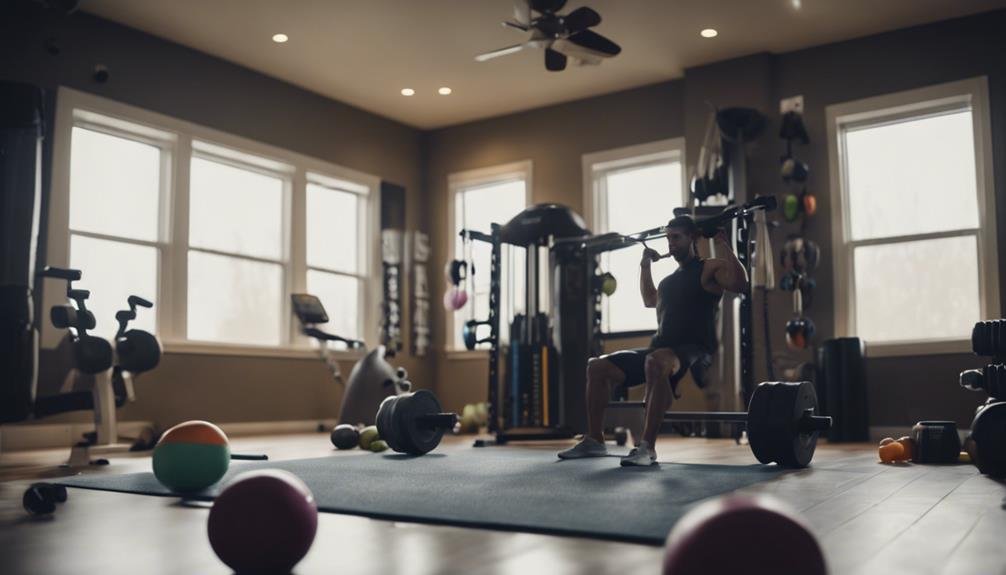
Advanced Strength Training Programs for Home Workouts
Journey to unprecedented strength and physique transformation with cutting-edge home workouts that shatter plateaus and ignite progress.

We're taking our fitness to the next level by creating advanced strength training programs that can be done from the comfort of our own homes. To do this, we're focusing on periodized training, which involves switching up our workouts every few weeks to keep our muscles guessing. We're also implementing progressive overload techniques, like micro progressions and load vectors, to facilitate consistent growth. By incorporating advanced exercise progressions and creating a custom workout schedule, we're avoiding plateaus and taking our workouts to the next level. As we dive deeper into our fitness journey, we'll uncover even more secrets to maximizing our strength and transforming our bodies.
Key Takeaways
- Periodized training cycles with 3-4 phases, each focusing on specific goals like endurance, strength, or power, help avoid plateaus and ensure progress.
- Hypertrophy and strength phases should be included in a training program, with the former focusing on higher volume and lower intensity and the latter on heavier weights and lower reps.
- Progressive overload techniques, such as micro progressions and load vectors, guarantee muscle adaptation and growth over time, and should be incorporated into a workout routine.
- Creating a custom workout schedule tailored to individual needs and goals, with specific, measurable, and achievable goals, is essential for progress and avoiding ineffective routines.
- Variation training, incorporating changes in exercise parameters, muscle confusion techniques, and periodized training cycles, should be used to avoid plateaus and promote growth.
Periodized Training for Muscle Growth
When it comes to maximizing muscle growth, incorporating periodized training into our strength training programs can be a game-changer. By dividing our training into specific muscle phases and training blocks, we can avoid plateaus and facilitate continuous progress. A typical periodized training program consists of three to four distinct phases, each lasting several weeks or even months. During each phase, we focus on a specific training goal, such as building endurance, strength, or power. By changing our training stimulus every few weeks, we can keep our muscles guessing and prevent adaptation. For example, during a hypertrophy phase, we might focus on higher volume and lower intensity to build muscle size. In a strength phase, we'd shift to lower volume and higher intensity to build muscle strength. By organizing our training into these distinct phases and blocks, we can promote a well-structured program that yields consistent progress and muscle growth.
Progressive Overload Techniques Explained
How do we guarantee that our muscles continue to adapt and grow over time, despite our best efforts with periodized training? The answer lies in progressive overload techniques. We need to continually challenge our muscles by increasing the intensity of our workouts to stimulate growth and strength gains. One effective way to do this is through micro progressions. By making small, incremental increases in weight, reps, or sets over time, we can stimulate our muscles to constantly adapt to new demands. Load vectors are another key concept in progressive overload. By changing the direction or angle of our exercises, we can target different muscle fibers and prevent plateaus. For example, switching from a traditional bench press to an incline press targets the upper chest muscles from a different angle. By incorporating micro progressions and load vectors into our training, we can promote our muscles to continue adapting and growing over time. This is especially important for home workouts, where the lack of variety in equipment can lead to stagnation.
Building a Home Gym on Budget
With a little creativity and resourcefulness, we can build an effective home gym on a shoestring budget, no matter how small our space or tight our purse strings. By prioritizing space optimization, we can fit the fitness essentials into even the smallest of areas. For instance, we can use wall-mounted equipment or compact machines that serve multiple purposes. When it comes to gym decor, we don't need to break the bank. A few motivational quotes, some plants, and a fresh coat of paint can create a motivating atmosphere without denting our wallet.
To save even more, we can get creative with equipment alternatives. For example, we can use resistance bands instead of free weights or make our own DIY equipment, like a pull-up bar using a sturdy wooden dowel. Budget hacks like buying second-hand equipment or shopping during sales can also help us stay within our budget. By being mindful of our spending and thinking outside the box, we can create a functional and effective home gym that meets our fitness needs without draining our bank account.
Advanced Exercise Progressions Uncovered
We crank up the intensity of our strength training programs by incorporating advanced exercise progressions that challenge our bodies and minds. To take our workouts to the next level, we need to strategically progress our exercises to continue making gains. This is where micro progressions come in – small, incremental changes to exercises that add up to make a big difference. We can progress exercises by increasing the weight, reps, or sets, or by modifying the exercise itself, such as changing the grip or stance.
An exercise hierarchy is essential in guiding our progressions. By organizing exercises from simplest to most complex, we can facilitate a logical and safe progression. For example, we might start with a bodyweight squat, then progress to a goblet squat, and finally, to a barbell squat. This hierarchy allows us to build strength and confidence before moving on to more challenging exercises. By incorporating advanced exercise progressions into our strength training programs, we can break through plateaus and achieve our fitness goals.
Creating a Custom Workout Schedule
Our workout schedules should be tailored to our individual needs and goals, taking into account our lifestyles, fitness levels, and available time. This guarantees we're making progress towards our fitness objectives and not wasting time on ineffective routines. To create a custom workout schedule, we need to set specific, measurable, and achievable goals. This involves identifying our strengths, weaknesses, and areas for improvement. We can then allocate our time and energy accordingly.
| Day | Workout Focus |
|---|---|
| Monday | Chest and Triceps |
| Tuesday | Back and Biceps |
| Wednesday | Rest day |
| Thursday | Legs and Shoulders |
Avoiding Plateaus With Variation Training
As we progress in our strength training journey, we're bound to hit a plateau sooner or later. To avoid this, we need to incorporate variation training into our routine, and that's exactly what we'll explore next. By changing exercise parameters, employing muscle confusion techniques, and adopting periodized training cycles, we can facilitate continued progress and avoid stagnation.
Change Exercise Parameters
How can you avoid plateaus in your strength training program, and what role does varying exercise parameters play in this pursuit? We've all been there – stuck in a rut, making no progress, and wondering what's going on. One key strategy to break through this plateau is to change exercise parameters. By modifying variables such as exercise duration, we can challenge our muscles in new ways and stimulate growth.
For example, if we're used to doing 3 sets of 8-12 reps, we can try increasing the exercise duration by adding an extra set or two, or by increasing the number of reps. This forces our muscles to adapt to the new demands, particularly our slow-twitch muscle fibers, which are responsible for endurance. By varying exercise parameters, we can target different muscle fibers and avoid plateaus. Additionally, changing the exercise duration can also affect the intensity of our workouts, allowing us to push ourselves harder and achieve greater gains. By incorporating these variations into our strength training program, we can facilitate continued progress and avoid the dreaded plateau.
Muscle Confusion Techniques
By switching up our strength training routine with muscle confusion techniques, we can stave off plateaus and keep our muscles guessing, ensuring continuous progress and avoiding stagnation. This approach involves varying our workout routines to avoid muscle adaptation, which can lead to plateaus and stagnation. Muscle confusion techniques help to prevent muscle imbalance, where some muscle groups become stronger than others, leading to poor posture, injuries, and decreased overall performance.
Here are three ways to incorporate muscle confusion techniques into our workout routine:
- Change the grip or stance: Altering our grip or stance when performing exercises can target different muscle groups and prevent plateaus.
- Modify the range of motion: Changing the range of motion when performing exercises can shock our muscles and prevent adaptation.
- Incorporate isometric and plyometric exercises: Incorporating isometric and plyometric exercises can add variety to our workout routine and prevent muscle adaptation.
Periodized Training Cycles
We structure our workouts into periodized training cycles to avoid plateaus, deliberately varying our training stimuli to challenge our muscles and promote continuous progress. By dividing our training into distinct phases, we can tailor our workouts to specific goals and avoid adaptation, which can lead to stagnation. A typical training cycle consists of three to four phases, each with a unique focus and intensity level. We start with a hypertrophy phase, focusing on higher volume and lower intensity to build muscle mass. Next, we shift to a strength phase, increasing intensity and decreasing volume to develop raw power. Finally, we enter a power phase, emphasizing explosive movements to enhance athletic performance. This cycle variation keeps our muscles guessing, ensuring consistent progress and minimizing the risk of plateaus. By periodically changing our training stimuli, we can continue to make gains and avoid the frustration of stagnant progress.
Frequently Asked Questions
Can I Still Make Gains With Only Bodyweight Exercises?
We can still make gains with bodyweight exercises, but it's vital to incorporate progressive overload and address muscle imbalances to guarantee continued progress and prevent plateaus, even without weights.
How Long Does It Take to See Results From Strength Training?
As we undertake this fitness journey, the compass of patience guides us. Consistency matters, and with dedication, we can expect to see noticeable results from strength training in 6-8 weeks, but patience is required to realize our full potential.
Can I Do Strength Training With an Injury or Chronic Pain?
"We understand that injuries and chronic pain can be a hurdle. Fortunately, with modified exercises and proper pain management, we can still incorporate strength training into our routine, ensuring a safe and effective workout."
Is It Necessary to Warm up Before Starting a Strength Workout?
As we prepare for battle, our bodies are like untested swords, needing sharpening before clashing with iron weights. It's essential to warm up before strength training, incorporating dynamic stretching and muscle activation to avoid injuries and optimize performance.
Can I Strength Train if I'm Over 60 Years Old?
"We, as seniors, can definitely strength train, and Silver Fitness programs can help. With Elderly Motivation, we're empowered to prioritize our health, and research shows that exercise can improve our overall well-being and functional ability."
Conclusion
As we've explored the sphere of advanced strength training for home workouts, we've uncovered the secrets of periodized training, progressive overload, and exercise progressions. We've built a home gym on a budget and crafted a custom workout schedule. By incorporating variation training, we've dodged the bullet of plateaus. Now, as we venture on this fitness odyssey, we'll heed the words of ancient Greek philosopher, Aristotle: 'We are what we repeatedly do. Excellence, then, is not an act, but a habit.'