Don't miss our holiday offer - 20% OFF!

Yoga for Stress Relief: Calming Routines at Home
Optimize your well-being with gentle stretches, breathing exercises, and calming poses that quiet the mind and soothe the body.

We're no strangers to feeling overwhelmed, like we're drowning in responsibilities and uncertainties, and that's exactly why we're turning to yoga for stress relief, cultivating calmness, and reclaiming control over our lives. With regular practice, we can reduce cortisol levels, increase serotonin, and regulate our sleep patterns. At home, we can start with gentle stretches, breathing exercises, and calming poses to quiet the mind and soothe the body. As we explore these calming routines, we'll find ourselves more grounded, resilient, and at peace. And as we continue on this journey, we'll discover even more ways to harness yoga's transformative power.
Key Takeaways
- Regular yoga practice reduces stress levels, cultivates calmness, and regulates sleep patterns for a more peaceful life.
- Breathing exercises like 4-7-8 Breathing, Box Breathing, and Alternate Nostril Breathing slow down heart rate and promote relaxation.
- Gentle stretches, such as neck and shoulder stretches, release tension and promote relaxation, while chest opening exercises promote heart expansion.
- Yoga poses like Tree Pose and Seated Forward Fold cultivate grounding, stability, and calmness, reducing anxiety and uncertainty.
- Creating a consistent yoga routine at home, even just 10-15 minutes a day, can help establish a sense of control and peace in daily life.
Understanding Stress and Anxiety
When we're stuck in a cycle of stress and anxiety, it's easy to feel overwhelmed, like we're drowning in a sea of responsibilities and uncertainties. It's as if our minds are racing with a constant stream of worries, making it impossible to catch a breath. But before we can find relief, we need to understand what's driving our stress and anxiety. Identifying our personal stress triggers is essential – are we overwhelmed by work deadlines, financial pressures, or relationship issues? Once we pinpoint these triggers, we can start to develop strategies to cope with them. There are many types of anxiety, too – from generalized anxiety to social anxiety, phobias, and panic disorders. By recognizing the specific type of anxiety we're experiencing, we can begin to address its root causes. By acknowledging our stress triggers and understanding our anxiety types, we take the first step towards reclaiming control over our lives and finding peace.
Benefits of Yoga for Stress
As we acknowledge our stress triggers and anxiety types, we can now harness the power of yoga to mitigate their impact, and research has shown that regular practice can substantially reduce our stress levels. By incorporating yoga into our daily routine, we can develop stress resilience and cultivate a sense of calm in the face of life's challenges.
Here are just a few benefits of yoga for stress relief:
- Reduces cortisol levels: Yoga has been shown to decrease cortisol levels, the hormone associated with stress and anxiety.
- Enhances mood: Yoga practice has been linked to increased serotonin levels, which can help alleviate symptoms of depression and anxiety.
- Improves sleep: Regular yoga practice can help regulate sleep patterns, leading to better rest and reduced stress.
- Increases self-awareness: Through yoga therapy, we can develop a greater understanding of our thoughts, emotions, and bodily sensations, allowing us to better cope with stress.
Preparing Your Home Yoga Space
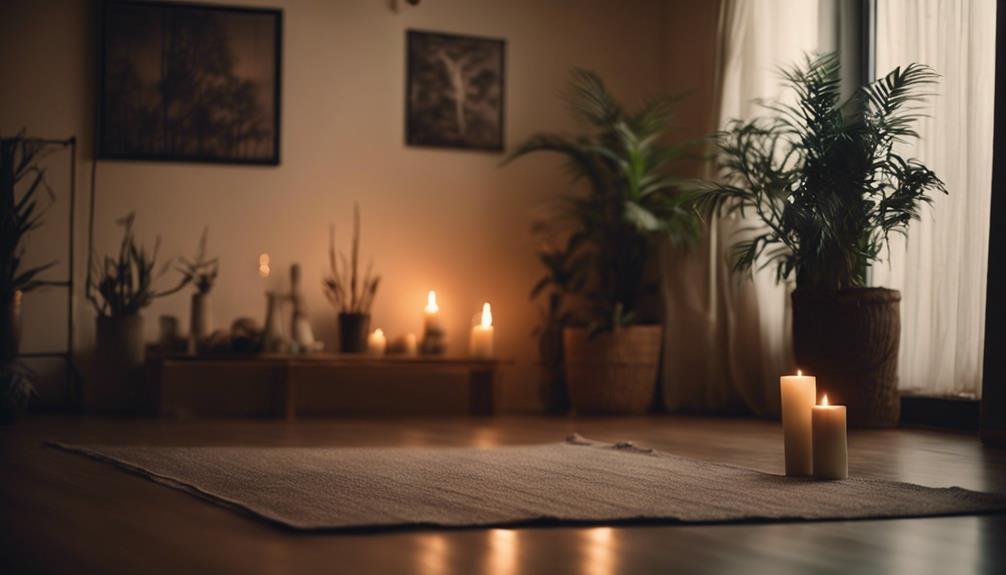
We create a peaceful oasis in our own homes by setting up a dedicated yoga space that fosters relaxation and calmness. This sacred space is where we'll retreat to unwind, stretch, and breathe, so we must get it just right. We start by decluttering the area, removing any distractions or stressors that might disrupt our practice. We want our sanctuary to be a haven, free from clutter and chaos. Next, we create a peaceful ambiance by adjusting the lighting, temperature, and decor to promote relaxation. We might add some calming colors, soft textiles, or soothing scents to create a sense of tranquility. By doing so, we'll cultivate an atmosphere that invites relaxation and calmness, making it easier to quiet our minds and focus on our breath. Our dedicated yoga space becomes a refuge, a place where we can escape the stresses of everyday life and reconnect with our inner selves.
Simple Breathing Exercises for Calm
Now that we've created a peaceful oasis in our homes, let's focus on calming our minds and bodies with simple yet powerful breathing exercises that can be done anywhere, anytime. These exercises are essential for reducing stress and anxiety, and can be practiced by anyone, regardless of age or fitness level.
Here are some simple yet effective breathing exercises to get us started:
- 4-7-8 Breathing: Inhale through our nose for a count of 4, hold for 7, and exhale through our mouth for 8. This exercise slows down our heart rate and promotes relaxation.
- Box Breathing: Inhale for 4 counts, hold for 4 counts, exhale for 4 counts, and hold again for 4 counts. This exercise helps us focus and calm our minds.
- Alternate Nostril Breathing: Close one nostril and inhale through the other, then switch. This exercise balances our breath and calms our nervous system.
- Diaphragmatic Breathing: Place one hand on our belly and one on our chest. Inhale deeply, allowing our belly to rise while our chest remains still. This exercise promotes mindful inhales and relaxes our diaphragm.
Gentle Stretches for Tension Relief
As we move forward on our yoga journey, we'll focus on gentle stretches that specifically target areas of tension in our bodies. We'll start by releasing the weight of stress from our neck and shoulders, then move on to open up our chests and improve our posture. From there, we'll work on loosening up our hip flexors, helping us stand taller and feel more grounded.
Neck and Shoulder Release
Tension in our necks and shoulders can become a heavy burden, weighing us down physically and emotionally, and gentle stretches can be a powerful tool in releasing this pent-up stress. As we spend more time at our desks, staring at screens, and typing away, our posture suffers, and muscle tension builds up. This can lead to headaches, fatigue, and a general feeling of being drained.
To combat this, we can incorporate simple neck and shoulder stretches into our daily routine. Here are 4 easy ways to release tension:
- Desk Stretching: Take breaks to gently tilt your head from side to side, and then forward and backward.
- Posture Correction: Sit up straight, with shoulders relaxed and down, and engage your core to support your spine.
- Muscle Tension Relief: Slowly roll your shoulders forward and backward, and then squeeze and release your shoulder blades.
- Headache Relief: Gently massage your temples and the base of your skull to release tension and promote relaxation.
Chest Opening Exercises
We often forget that our chest, too, can become tight and constricted, perpetuating feelings of anxiety and stress, which is why incorporating gentle chest opening exercises into our daily routine can be incredibly liberating. When we're stressed, our chest tends to cave inward, compressing our heart and lungs. By opening up our chest, we can promote heart expansion, taking deeper breaths and calming our nervous system.
A simple yet effective exercise is the shoulder roll. As we roll our shoulders forward and backward, we loosen up the tension in our upper back and chest. We can do this exercise anywhere, whether we're sitting at our desk or standing in line. Another exercise is the chest opener, where we stand in a doorway with our hands on the doorframe at shoulder height. We take a deep breath in, and as we exhale, we lean forward, stretching our chest. We can repeat this process several times, feeling our chest expand and our heart rate slow down. By incorporating these exercises into our daily routine, we can reduce tension and promote a sense of calm and relaxation.
Hip Flexor Relief Stretches
Let's release the tension in our hips and legs, where stress and anxiety often manifest, by incorporating gentle hip flexor relief stretches into our daily routine. We often neglect these areas, but they're vital for overall well-being. By stretching our hip flexors, we can alleviate tension that can radiate to our lower back, knees, and even affect our mood.
- Kneeling Hip Flexor Stretch: Kneel on all fours, bringing one knee forward and keeping the other foot flat. Lean forward, stretching the front of our hip.
- Lying Iliacus Stretch: Lie on our back, bringing one knee towards our chest. Hold onto our knee with our hand, gently stretching the Iliacus muscle.
- Piriformis Relief: Sit on the floor with our affected leg crossed over our other leg. Place our hand on the knee of the crossed leg, pulling it toward our opposite shoulder.
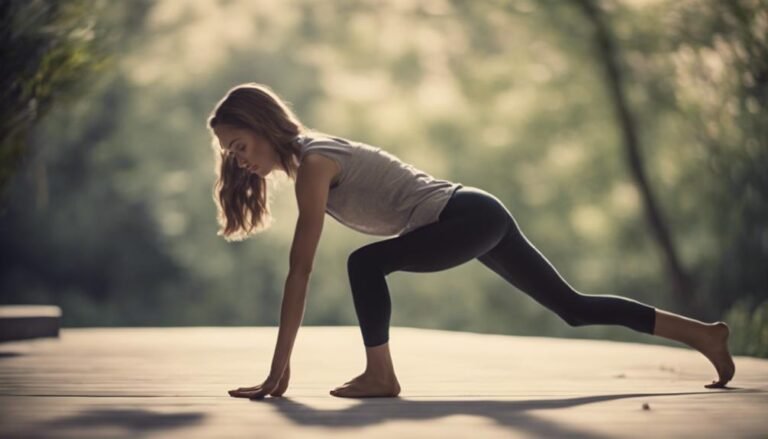
- Lizard Pose: Start on our hands and knees. Step our right foot forward, keeping our knee bent at a 90-degree angle. Lean forward, stretching the front of our hip. Switch sides.
Yoga Poses for Emotional Balance
As we venture into the domain of emotional balance, we discover that certain yoga poses have a profound impact on calming our minds and soothing our emotional landscapes. When we're struggling with mood swings, we must find poses that promote emotional resilience. We've found that Tree Pose (Vrksasana) helps us cultivate a sense of grounding and stability, reducing feelings of anxiety and uncertainty.
Another pose that's been a game-changer for us is Seated Forward Fold (Paschimottanasana). This pose helps to calm the nervous system, quieting the mind and promoting a sense of relaxation. By incorporating these poses into our practice, we've noticed a significant reduction in mood swings and an increase in emotional resilience.
As we continue to explore the sphere of emotional balance, we're reminded that yoga is not just about the physical poses, but about cultivating a deeper connection with ourselves. By combining these poses with mindfulness and breathwork, we can develop a greater sense of emotional awareness, allowing us to navigate life's challenges with more ease and grace.
Building a Morning Yoga Routine
As we explore the benefits of building a morning yoga routine, we'll discover how it can set a positive tone for the day ahead. By incorporating yoga into our morning routine, we can wake up feeling refreshed and centered, ready to tackle whatever life throws our way. By making yoga a non-negotiable part of our morning ritual, we can cultivate a sense of calm and clarity that stays with us long after we roll up our mats.
Wake Up Refreshed
By incorporating a morning yoga routine into our daily lives, we can set ourselves up for a day filled with energy, clarity, and a sense of calm. As we start our day, we want to feel refreshed and revitalized, rather than groggy and sluggish. By establishing a consistent morning yoga practice, we can improve our sleep habits and wake up feeling more rested and centered.
Here are some tips to help us wake up refreshed:
- Establish a consistent sleep schedule to regulate our body's internal clock.
- Create a bedtime routine to signal to our brain that it's time to wind down.
- Get some morning sunlight to help regulate our circadian rhythms.
- Start with gentle stretches to ease into our morning yoga practice.
Start the Day
We begin our morning yoga routine by setting a realistic goal, committing to just 10-15 minutes of practice to start, and gradually increasing the duration as we build our strength and flexibility. This gentle approach helps us establish a consistent routine, which is essential for reducing stress and anxiety.
To enhance our practice, we incorporate Morning Mantras, repeating gentle reminders to ourselves, such as "I am capable and strong" or "I am worthy of peace and calm." These affirmations help set a positive tone for the day, calming our minds and preparing us for the challenges ahead.
Our Daily Intentions are also an essential part of our morning routine. We take a moment to reflect on what we hope to achieve, whether it's tackling a difficult task or simply showing up with kindness and compassion. By setting our intentions, we focus our energy and create a sense of purpose.
| Morning Routine | Duration | Benefits |
|---|---|---|
| Morning Mantras | 2-3 minutes | Calms the mind, sets positive tone |
| Gentle Stretching | 5-7 minutes | Increases flexibility, reduces tension |
| Meditation | 5 minutes | Reduces stress, increases focus |
Yoga for Better Sleep Quality
Practicing yoga regularly can help us quiet our minds and relax our bodies, making it easier to fall asleep and stay asleep throughout the night. By incorporating yoga into our daily routine, we can improve our sleep quality and wake up feeling refreshed and rejuvenated. A good night's sleep is essential for our overall well-being, and yoga can play a significant role in achieving that.
Here are some tips to help us get started:
- Establish a bedtime routine: Develop a calming pre-sleep routine that signals our body that it's time to wind down.
- Practice gentle stretches: Incorporate gentle stretches into our yoga practice to help relax our muscles and calm our minds.
- Maintain good sleep hygiene: Create a sleep-conducive environment by keeping our bedroom cool, dark, and quiet.
- Keep a dream journal: Writing down our dreams can help us process our subconscious thoughts and emotions, leading to a more peaceful sleep.
Managing Stress With Yoga Nidra
As we explore the concept of managing stress with yoga nidra, we're excited to discover the profound impact it can have on our well-being. By incorporating deep relaxation techniques into our practice, we can quiet the mind and soothe the body, paving the way for a deeper sense of calm and clarity. Through guided meditation, we'll uncover the benefits that await us, from reduced anxiety to enhanced self-awareness.
Deep Relaxation Techniques
Incorporating Yoga Nidra into our daily routine can be a powerful tool for calming the mind and body, allowing us to better manage stress and anxiety. As we venture deeper into the world of Yoga Nidra, we discover the profound impact it can have on our overall well-being. By incorporating deep relaxation techniques into our practice, we can quiet the mind, soothe the nervous system, and rejuvenate our entire being.
- Reduced anxiety and stress: By quieting the mind and calming the nervous system, we can reduce feelings of anxiety and stress.
- Improved sleep: Deep relaxation techniques can help regulate our sleep patterns, leading to more restful and rejuvenating sleep.
- Increased self-awareness: Through autogenic training and progressive relaxation, we can gain a deeper understanding of our thoughts, emotions, and bodily sensations.
- Enhanced emotional resilience: By cultivating a sense of calm and inner peace, we can better navigate life's challenges and setbacks.
As we explore the world of Yoga Nidra, we begin to discover the secrets of deep relaxation, and discover a sense of calm and serenity that permeates every aspect of our lives.
Guided Meditation Benefits
Through guided meditation, we can tap into the profound benefits of Yoga Nidra, tapping into a sense of calm and clarity that helps us manage stress and anxiety with greater ease. By adopting a mindful approach, we can quiet our minds and access a deeper state of relaxation, allowing us to navigate life's challenges with more ease and confidence. As we settle into this peaceful state, we begin to experience a profound sense of inner peace, as if a weight has been lifted from our shoulders.
Guided meditation with Yoga Nidra takes us on a journey of self-discovery, helping us develop a greater understanding of our thoughts, emotions, and behaviors. As we become more aware of our inner world, we can better navigate the complexities of life, making choices that align with our values and goals. By incorporating guided meditation into our daily routine, we can cultivate a sense of calm, clarity, and inner peace that stays with us long after our practice is complete.
Creating a Consistent Practice
We start our yoga practice with the intention of making it a consistent habit, but often life gets in the way and our best intentions fall by the wayside. It's easy to get discouraged when we miss a day or two, but the key is to be gentle with ourselves and get back on track. To create a consistent practice, we need to set realistic goals and make a plan that works for us.
Here are some tips to help us stay committed:
- Schedule it in: Treat yoga practice as a non-negotiable part of our daily routine, just like brushing our teeth or taking a shower.
- Find a yoga buddy: Having someone to hold us accountable and share the experience with can make all the difference.
- Start small: Begin with a manageable goal, like practicing three times a week, and gradually increase the frequency as we build our habit.
- Make it a ritual: Create a peaceful and inviting space, light some candles, and make yoga a special "me" time.
Overcoming Common Yoga Obstacles
As we venture deeper into our yoga practice, each of us inevitably faces a unique set of challenges that can threaten to derail our progress. Fear of not being flexible enough, fear of not being able to keep up, or fear of looking silly in front of others can lead to fear avoidance and yoga intimidation. But, we're here to tell you that it's normal and that you're not alone.
| Common Yoga Obstacles | Overcoming Strategies |
|---|---|
| Fear of not being flexible enough | Focus on progress, not perfection. Celebrate small victories! |
| Fear of not being able to keep up | Start slow, listen to your body, and honor your limitations. |
| Feeling self-conscious | Practice at home, or find a gentle, beginner-friendly class. |
| Lack of motivation | Schedule yoga into your daily routine, and find a yoga buddy for accountability. |
| Feeling overwhelmed | Break down complex poses into smaller, manageable parts, and breathe! |
Frequently Asked Questions
Can I Practice Yoga if I Have a Physical Disability or Injury?
We believe everyone deserves yoga's benefits, regardless of physical limitations. We adapt with accessible modifications, focusing on gentle movements to guarantee a safe, empowering practice that honors our unique bodies and abilities.
How Long Does It Take to See Benefits From a Yoga Practice?
"Did you know 80% of people experience stress daily? We've found that with a daily commitment to yoga, even just 10-15 minutes in the morning, we start to notice benefits like reduced anxiety and improved mood within 2-4 weeks."
Can Yoga Be Done During Pregnancy or Menstruation?
It is recognized that pregnancy and menstruation can bring unique challenges. Fortunately, with prenatal modifications and awareness of pregnancy precautions, we can adapt our yoga practice to prioritize comfort, safety, and well-being during these times.
Do I Need to Be Flexible to Start a Yoga Practice?
"We don't need to be flexible to start a yoga practice; as mindful beginners, we can use gentle modifications to tailor poses to our needs, honoring our bodies and breathing space into our lives."
Can Yoga Be Done With Pets or Children Around?
"We find that yoga can absolutely be done with pets or kids around! In fact, we love incorporating pet-friendly poses and family yoga into our practice, making it a fun, calming experience for everyone involved."
Conclusion
As we close our eyes and take a final, deep breath, we feel the weight of stress and anxiety slowly lifting, like morning fog evaporating in the warm sunlight. Our yoga practice has become a sanctuary, a haven where we can retreat from the chaos and find peace. With each gentle stretch and calming breath, we're weaving a tapestry of tranquility, thread by thread, into a fabric of serenity that envelops us, comforting and reassuring.