Don't miss our holiday offer - 20% OFF!

Relaxing Evening Yoga Routines for Home Practice
Find serenity at home with gentle yoga routines, calming essential oils, and meditation techniques to soothe your mind and body before sleep.

As we settle into the evening, our minds and bodies crave a peaceful retreat from the day's stresses, and a gentle, relaxing yoga practice at home can be just the sanctuary we need to unwind and prepare for a restful night's sleep. We create a serene ambiance with dimmed lights and calming essential oils, then ease into gentle stretches and soothing yoga poses to quiet the mind and soothe the body. Conscious breathing and meditation techniques calm our nervous system, and a gentle flow practice becomes a meditation in motion, calming and balancing us. As we surrender to tranquility, we'll discover even more ways to unwind and prepare for a rejuvenating slumber.
Key Takeaways
- Create a peaceful atmosphere at home by dimming lights, using soft candlelight, and incorporating calming essential oils like lavender and chamomile.
- Practice gentle stretches and yoga poses, focusing on calming neck stretches, shoulder rolls, and spinal twists to release tension and promote relaxation.
- Use breathing exercises and meditation techniques, such as conscious breathing, body scan, and loving-kindness meditation, to calm the nervous system and quiet the mind.
- Incorporate gentle flow yoga into your evening routine, using soft focus, quiet strength, and gentle movements to calm the nervous system and prepare for rest.
- End your practice with calming meditation or deep breathing exercises to quiet the mind and prepare the body for a restful night's sleep.
Creating a Peaceful Atmosphere
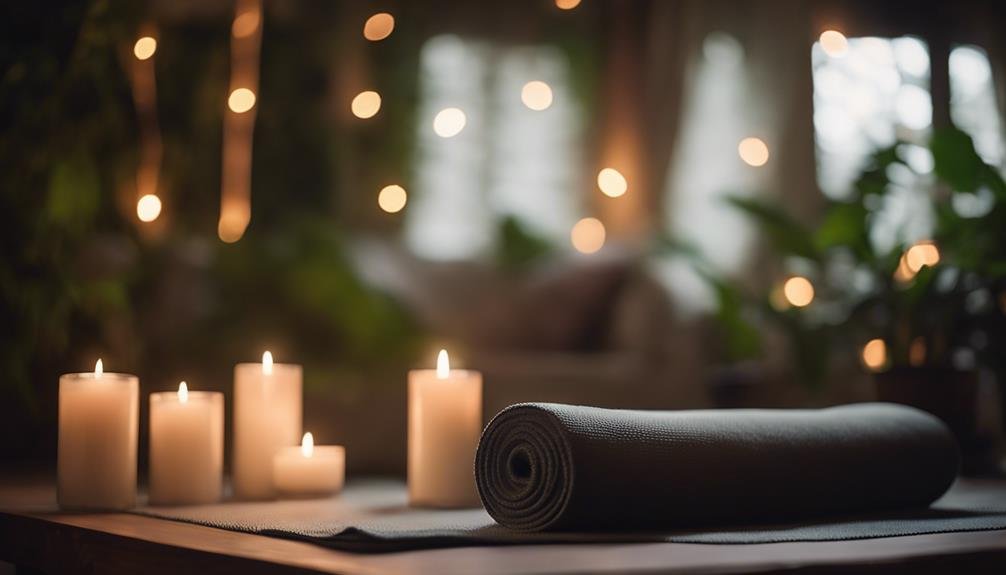
As we step into our evening yoga routines, we set the tone by crafting a peaceful atmosphere that quiets the mind and soothes the body. We create a serene ambiance by dimming the lights and illuminating our space with soft, warm candle lighting. The gentle flicker of the flames calms our senses, melting away the stresses of the day.
To further enhance our tranquil setting, we incorporate the calming properties of essential oils. We diffuse a soothing blend of lavender and chamomile, allowing their gentle aromas to envelop us in relaxation. As we inhale the calming scents, our minds and bodies begin to unwind, letting go of tension and anxiety.
Gentle Stretches for Relaxation
As we move into our gentle stretches for relaxation, we'll focus on calming our bodies and quieting our minds. We'll start with calming neck stretches that ease tension and promote flexibility. Next, we'll move on to soothing shoulder rolls and gentle spinal twists that release stress and melt away fatigue.
Calming Neck Stretches
Let's gently ease into our calming neck stretches, allowing our heads to slowly tilt to the right, bringing our ears towards our shoulders. As we hold this pose, we can feel the tension in our necks begin to release, easing the strain that's built up from hours of staring at screens and typing away on our keyboards. It's no secret that our modern lifestyle, with its emphasis on desk ergonomics, can lead to tech strains that radiate from our necks and shoulders. By taking a few moments to focus on these calming neck stretches, we can begin to unwind and relax, letting go of the tension that's accumulated throughout the day.
As we exhale, let's slowly tilt our heads to the left, repeating the motion and holding for a few breaths. We can also try gently rotating our heads from side to side, releasing any remaining tension. Take a deep breath in, feeling the calmness spread through your neck and shoulders. As we release our final breath, let's take a moment to notice the subtle yet profound shift in our bodies, feeling more relaxed, more centered, and more at peace.
Soothing Shoulder Rolls
We'll now soften our shoulders, releasing the residual tension that can creep up from our neck stretches, by rolling them forward and up towards our ears. This gentle movement helps to relax the muscles in our shoulder anatomy, specifically the deltoids and trapezius, which can become tight and rigid from daily activities. As we roll our shoulders, we're encouraging muscle relaxation, allowing the tension to melt away.
| Shoulder Roll | Benefits | Tips |
|---|---|---|
| Forward Roll | Relaxes deltoids | Keep arms relaxed |
| Upward Roll | Stretches trapezius | Breathe deeply |
| Circular Roll | Loosens shoulder joint | Move slowly |
| Reverse Roll | Releases tension | Don't bounce |
As we continue to roll our shoulders, we can feel the weight of the day lifting, our muscles relaxing, and our minds calming. This simple yet effective movement is a great way to unwind and prepare for a restful evening. By incorporating shoulder rolls into our evening yoga routine, we're taking care of our overall well-being and setting ourselves up for a peaceful night's sleep.
Gentle Spinal Twists
Rotating our torso gently, we unwind the spinal column, releasing tension that's built up throughout the day, and quieting the mind in the process. As we twist, we stimulate the flow of Kundalini energy, the life force that resides within us. This subtle yet powerful energy courses through our chakras, or energy centers, balancing and aligning our entire being.
Gentle spinal twists also help to harmonize our Meridian alignment, the pathways through which life-force energy flows. By releasing any blockages or stagnation, we create a free-flowing current that nourishes our organs, tissues, and cells. As we breathe deeply, our diaphragm descends, and our spine lengthens, allowing our entire torso to relax and let go.
In this serene state, we're able to quiet the mind, letting go of worries and doubts. Our breath becomes calm and steady, and our body releases its grip on tension, allowing us to slip into a state of deep relaxation. As we practice gentle spinal twists, we're not just stretching our physical body; we're also cultivating a deeper connection with our inner selves.
Calming Breathing Exercises
As we settle into our evening yoga routines, calming breathing exercises become essential for quieting the mind and soothing the body. We've had a long day, and it's time to unwind and prepare for a restful night's sleep. One of the most effective ways to do this is by focusing on our breath.
We start by finding a comfortable seated position, with our backs straight and our eyes closed. We take slow, deep breaths, feeling our diaphragm expand as our lungs fill with air. As we inhale, we focus on the sensation of our chest rising, and as we exhale, we feel our body relax and let go. This simple act of conscious breathing slows down our heart rate, calms our nervous system, and quiets our minds.
In the morning, we often rush through our meditation practice, trying to squeeze in a few minutes of mindfulness before starting our day. But in the evening, we can take our time, savoring each breath and allowing ourselves to fully relax. As we breathe in and out, we let go of any tension or stress, making room for a peaceful and restful night's sleep.
Soothing Yoga Poses for Sleep
As we prepare for a restful night's sleep, we'll explore soothing yoga poses that calm our minds and bodies. We'll start by calming our minds and releasing tension in our necks and shoulders, allowing us to let go of the day's stress. Next, we'll unwind with forward folds, gently stretching our bodies and quieting our minds, paving the way for a peaceful slumber.
Calming the Mind Body
Practicing soothing yoga poses before bed helps us quiet our minds and relax our bodies, setting the stage for a restful night's sleep. As we prepare for a calming evening practice, we take a few moments to reflect on our day. We grab our journals and engage in some mindful journaling, writing down our thoughts, and letting go of any lingering stress or anxiety. This helps to clear our minds and calm our nervous system.
Next, we move onto our mats, and begin a gentle Body Scan. We lie down, eyes closed, and bring our attention to each part of our body, starting from our toes and moving up to the crown of our head. As we scan, we release any tension or discomfort, allowing our bodies to fully relax. We focus on our breath, feeling it move in and out of our bodies, calming our minds and soothing our nervous system. As we come to the end of our practice, we feel more relaxed, more centered, and more prepared for a restful night's sleep.
Relaxing Neck and Shoulders
With our minds clearer and our bodies more relaxed, we now focus on releasing tension in our neck and shoulders, common areas of stress accumulation that can disrupt our sleep. These areas are particularly prone to strain due to poor desk ergonomics and computer posture, which can lead to fatigue, headaches, and even insomnia.
To alleviate this tension, we'll practice the following poses:
- Chin Tucks: Slowly tuck our chin towards our chest, holding for 30 seconds and releasing. Repeat 5-7 times.
- Shoulder Rolls: Roll our shoulders forward and backward in a circular motion, repeating 5-7 times.
- Ear to Shoulder: Gently bring our ear towards our shoulder, holding for 30 seconds and releasing. Repeat on the other side.
- Neck Stretch: Slowly tilt our head to the side, bringing our ear towards our shoulder. Hold for 30 seconds and release. Repeat on the other side.
These gentle stretches will help release physical and emotional tension, preparing us for a restful night's sleep.
Unwinding With Forward Folds
We'll now unwind with forward folds, soothing yoga poses that calm our minds and relax our bodies, preparing us for a restful night's sleep. As we move into these gentle stretches, we'll focus on maintaining proper body alignment to get the most out of each pose. Forward folds are a great way to increase our flexibility gains, especially in the hamstrings, calves, and spine.
Let's start with a simple forward bend, reaching for our toes or shins. We'll breathe deeply, feeling the stretch in our backs and hips. As we inhale, we'll lengthen our spines, and as we exhale, we'll fold forward, letting go of tension. We can modify the pose by bending our knees or using a block for support. Next, we'll move into a seated forward fold, stretching our entire back side, from shoulders to heels. Remember to keep our knees slightly bent if necessary, and engage our core for stability. As we settle into these poses, we'll quiet our minds and surrender to relaxation, readying ourselves for a peaceful night's sleep.
Mindfulness Meditation Techniques
As we settle into our evening yoga routines, we find ourselves drawn to mindfulness meditation techniques that quiet the mind and soothe the body. We crave a deeper sense of calm and clarity, and mindfulness meditation delivers. By incorporating mindfulness into our evening yoga practice, we can quiet the mind, reduce stress, and increase focus.
Here are some mindfulness meditation techniques to try:
- Focused attention: Bring your attention to your breath, a mantra, or a physical sensation in the body. When the mind wanders, gently bring it back to the chosen focus.
- Mindful walking: Pay attention to each step, the sensation of the feet touching the ground, and the movement of the body as you walk.
- Body scan: Lie down or sit comfortably, and bring awareness to each part of the body, starting from the toes and moving up to the crown of the head.
- Loving-kindness meditation: Focus on sending kind thoughts to yourself and others, cultivating compassion and understanding.
Unwinding With Gentle Flow
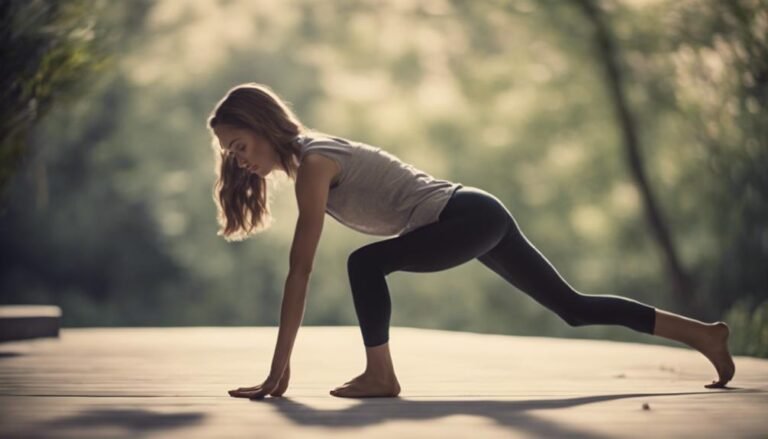
Gentle flow yoga becomes our sanctuary in the evening, where we surrender to slow, intentional movements that calm the nervous system and quiet the mind. As we move through the gentle flow sequence, we cultivate a Soft Focus, allowing our attention to soften and release any tension or distractions. Our breath becomes our anchor, guiding us deeper into relaxation with each exhalation.
With each pose, we tap into our Quiet Strength, allowing our bodies to support us in stillness and balance. We move with intention, not force, honoring the tender parts of ourselves that crave rest and rejuvenation. As we flow, our minds quiet, and our hearts open, allowing us to connect with our inner selves on a deeper level. The gentle flow practice becomes a meditation in motion, calming our nervous system and preparing us for a restful night's sleep. As we surrender to the gentle flow, we find peace, tranquility, and a sense of calm that stays with us long after our practice is complete.
Yoga for Better Sleep Tonight
Tonight, seven out of ten of us will struggle to fall asleep, but incorporating a calming yoga practice into our evening routine can substantially improve the quality of our rest. By making a few simple changes to our daily schedule, we can wake up feeling refreshed and rejuvenated.
Try incorporating these tips into our Moonlight Routine to improve our Sleep Schedule:
- Avoid stimulating activities and electronics at least an hour before bedtime
- Practice gentle stretches and breathing exercises to calm our minds and bodies
- Dim the lights and create a peaceful atmosphere to signal to our brains that it's time to sleep
- End our practice with a calming meditation or deep breathing exercise to quiet our minds and prep our bodies for rest
Frequently Asked Questions
Can I Practice Yoga if I Have a Pre-Existing Injury or Condition?
We understand concerns about practicing yoga with pre-existing injuries or conditions. Before starting, we recommend getting medical clearance to guarantee a safe practice, focusing on injury prevention and modifying poses to accommodate our individual needs.
Do I Need to Be Flexible to Start a Yoga Practice at Home?
Did you know 95% of people who try yoga continue practicing due to its benefits? We believe anyone can start a yoga practice, regardless of flexibility; it's about embracing a beginner's mindset and honoring our physical limitations, not comparing ourselves to others.
Can Yoga Help With Anxiety and Depression Symptoms?
We've found that yoga truly helps us cope with anxiety and depression symptoms by cultivating mindfulness benefits, promoting emotional balance, and calming our minds – it's been a game-changer for our overall well-being.
How Often Should I Practice Yoga to See Noticeable Benefits?
As we weave a tapestry of tranquility, we find that practicing yoga 2-3 times a week, with daily consistency, is the golden thread that weaves noticeable benefits into our lives, and scheduling strategies help us stay on track.
Can I Modify Yoga Poses to Accommodate My Body Type and Size?
We modify yoga poses to honor our unique body type and size, cultivating body awareness; we listen to our inner wisdom, adapting postures to feel comfortable, empowered, and serene in our practice.
Conclusion
As we drift off to dreamland, we're reminded of the ancient Greek concept of "sundowning" – the sacred hour when day succumbs to night. Our evening yoga routines have prepared us for a restful slumber, just as the stars prepare to twinkle in the evening sky. With each gentle stretch, calming breath, and soothing pose, we've woven a tapestry of tranquility, ensuring that tonight, we'll sleep like the gods on Mount Olympus.