Don't miss our holiday offer - 20% OFF!

Beginner Yoga Routines for Home Practice
Harmonize body and mind with gentle stretches and breathing exercises, and discover the transformative power of yoga in the comfort of your own home.

We're excited to start our yoga journey at home, cultivating flexibility, strength, and balance in both body and mind. We'll begin with foundational postures like Mountain Pose, Downward-Facing Dog, and Cobra Pose, which promote flexibility and strength. Simple breathing exercises will calm our minds and quiet our thoughts. As we initiate our morning yoga routine, we'll awaken our bodies and set a positive tone for the day. With consistent practice, we'll experience improved physical fitness, mental clarity, and inner peace. As we explore further, we'll discover more routines tailored to our goals, and our practice will flourish.
Key Takeaways
- Establish a strong foundation in yoga basics, including understanding yoga etiquette and philosophy, to set yourself up for success in your home practice.
- Master essential poses like Mountain Pose, Downward-Facing Dog, and Cobra Pose to build flexibility, strength, and balance.
- Incorporate hamstring-focused poses like Standing Forward Fold, Seated Forward Fold, and Pyramid Pose to increase flexibility and range of motion in the back of the legs.
- Start with gentle breathing exercises and relaxation techniques, such as 4-7-8 breathing and alternate nostril breathing, to calm the mind and body.
- Create a peaceful and calming home yoga practice space by decluttering, using calming colors, and incorporating natural light and comfortable flooring.
Getting Started With Yoga Basics
As we initiate our yoga journey, let's begin with the fundamentals: understanding the basics of yoga is essential to establishing a strong foundation for our home practice. We'll explore the world of yoga etiquette, where respect and awareness of our surroundings play a crucial role. By being mindful of our space, we create a serene atmosphere, allowing us to focus on our inner journey. We'll learn to respect our fellow yogis, our instructors, and ourselves, fostering a sense of community and harmony.
As we examine yoga philosophy, we'll discover the rich history and principles that guide our practice. We'll investigate the Eight Limbs of Yoga, which provide a framework for living a balanced and meaningful life. By embracing these principles, we'll cultivate a deeper understanding of ourselves and the world around us. By integrating yoga philosophy into our daily lives, we'll experience a profound shift in our perspective, leading to greater peace, clarity, and purpose. By laying a strong foundation, we'll set ourselves up for success, both on and off the mat.
Essential Yoga Poses for Beginners
Let's explore the essential yoga poses that will form the backbone of our home practice, starting with foundational postures that promote flexibility, strength, and balance. As beginners, it's essential to master these fundamental poses to build a strong yoga foundation. We'll focus on poses that target major muscle groups, improve our posture, and enhance our overall well-being.
We'll begin with Mountain Pose (Tadasana), which establishes good posture and engages our core. From there, we'll move on to Downward-Facing Dog (Adho Mukha Svanasana), which stretches the hamstrings and calves. Next, we'll practice Cobra Pose (Bhujangasana), which strengthens our back muscles and opens up our chest. We'll also explore Tree Pose (Vrksasana), which improves our balance and focus. To make these poses more accessible, we'll learn pose modifications that cater to our individual needs and abilities. By incorporating these essential poses into our daily practice, we'll establish a solid yoga foundation that will benefit our overall health and well-being.
Simple Breathing Exercises for Relaxation
We venture into the calming domain of breathing exercises, where conscious inhalations and exhalations harmonize our mind and body, melting away tension and stress. As we settle into a comfortable seated position, we close our eyes and begin to focus on the gentle rise and fall of our chest. We inhale deeply through our nose, filling our lungs with fresh air, and exhale slowly through our mouth, releasing any residual anxiety. With each breath, we feel our minds quieting, our thoughts clarifying, and our emotions balancing. This simple yet powerful practice grants us mental clarity, allowing us to approach life's challenges with a sense of calm and composure. As we continue to breathe, we cultivate emotional balance, letting go of worries and doubts, and embracing a sense of inner peace. With regular practice, we'll find ourselves responding to life's ups and downs with grace and equanimity, our breath a steady anchor in the midst of turmoil.
Morning Yoga Routine for Energy
Six days a week, we kick-start our morning with a 20-minute yoga routine that sparks energy and liveliness, setting a positive tone for the day ahead. We begin by setting an intention, whispering our Morning Mantras to ourselves, 'Today, I am strong and capable.' As we move into our Sunrise Stretch, we feel the warmth of the rising sun, and our bodies awaken, releasing any stiffness or fatigue. We flow through a series of gentle poses, linking movement with breath, and gradually build up to more dynamic sequences. Our Morning Yoga Routine is designed to boost circulation, stretch our muscles, and energize our minds. We take a few moments to pause, breathe deeply, and connect with our inner selves. As we conclude our practice, we feel refreshed, revitalized, and ready to take on the day with confidence and enthusiasm. By incorporating this simple yet powerful morning routine into our daily lives, we set ourselves up for a day filled with vigor and purpose.
Yoga for Flexibility and Stretching
As we explore yoga for flexibility and stretching, we're excited to share routines that will help us improve our range of motion and feel more limber. We'll focus on techniques that target our hamstrings, which tend to be notoriously tight, and work on increasing spinal mobility to promote a more open and relaxed posture. By incorporating these exercises into our daily practice, we can expect to see significant improvements in our overall flexibility and balance.
Improve Hamstring Flexibility
By incorporating hamstring-focused yoga poses into our daily practice, we can effectively increase flexibility and range of motion in the back of our legs. Understanding hamstring anatomy helps us tailor our practice to target these muscles effectively. The hamstrings, comprising the biceps femoris, semitendinosus, and semimembranosus, are responsible for knee flexion and hip extension. However, tight hamstrings can lead to limited flexibility and increased risk of injury.
To improve hamstring flexibility, we should focus on poses that stretch and lengthen these muscles. Here are some essential poses to include in our practice:
| Pose | Targeted Muscle |
|---|---|
| Standing Forward Fold | Hamstrings, calves |
| Seated Forward Fold | Hamstrings, glutes |
| Pyramid Pose | Hamstrings, IT band |
| Lizard Pose | Hamstrings, glutes |
| Hanumanasana | Hamstrings, quads |
Increase Spinal Mobility
We can greatly enhance our spinal flexibility and range of motion by incorporating specific yoga poses into our daily practice. A flexible spine is essential for maintaining good posture, reducing back pain, and improving overall mobility. By increasing our spinal mobility, we can move with more ease, freedom, and confidence.
Here are three essential yoga poses to help us achieve greater spinal flexibility:
- Cobra Pose (Bhujangasana): This gentle back extension pose strengthens our back muscles and increases spinal flexibility, promoting a healthy and supple spine.
- Cat-Cow Pose (Marjaryasana-Bitilasana): This dynamic pose combines spinal awareness with gentle twisting, helping to loosen and stretch our spine, neck, and shoulders.
- Sphinx Pose (Salamba Bhujangasana): This modified back extension pose targets the upper back and improves spinal mobility, promoting a stronger, more flexible spine.
Evening Yoga Routine for Sleep
As we prepare for a restful night's sleep, we'll explore a gentle evening yoga routine that soothes our minds and bodies. We'll start with relaxing evening stretches to release tension and calm our muscles, followed by calming breathing exercises to quiet our minds. Through these soothing mindful moments, we'll cultivate a sense of tranquility, setting ourselves up for a deep and rejuvenating sleep.
Relaxing Evening Stretches
Unwind with our gentle evening yoga routine, specifically designed to calm your mind and body, preparing you for a restful night's sleep. As we move through these relaxing evening stretches, we'll quiet our minds and soothe our muscles, letting go of the day's stress and tension.
Three essential poses to include in our calming evening routine are:
- Legs Up The Wall Pose: Recline with your legs up against a wall, feeling the gentle stretch in your lower back and calming your nervous system.
- Seated Forward Fold: Slowly fold forward, lengthening our spine and releasing tension in our neck and shoulders.
- Savasana: Melt into a state of deep relaxation, letting go of all thoughts and worries as we surrender to the present moment.
As we practice these calming rituals, we'll create gentle shifts between poses, allowing our bodies to fully relax and unwind. By incorporating these relaxing evening stretches into our daily routine, we'll wake up feeling refreshed, renewed, and ready to take on the day.
Calming Breathing Exercises
By calming our breath, we can quiet our minds and prepare our bodies for a restful night's sleep, so let's explore the calming breathing exercises that'll help us do just that. As we settle into our evening yoga practice, we'll focus on deep relaxation techniques to calm our nervous system. One exercise is the 4-7-8 breathing method, where we inhale through our nose for a count of four, hold for seven, and exhale through our mouth for eight. This slows down our heart rate and promotes relaxation. We can also practice alternate nostril breathing, which involves closing one nostril with our finger and inhaling through the other, then switching to exhale. This balances our breath and calms our mind. As we breathe, let's take a mindful pause, noticing the sensation of the air moving in and out of our body. We'll repeat these exercises several times, allowing ourselves to let go of tension and anxiety, and sink deeper into relaxation.
Soothing Mindful Moments
We'll move into a series of soothing mindful moments, where gentle stretches and quiet reflection help our bodies and minds surrender to the present. As we settle into our evening yoga routine, we'll quiet our minds and calm our nervous systems, preparing ourselves for a restful night's sleep.
Here are three essential elements to incorporate into our soothing mindful moments:
- Mindful meditation: Take a few minutes to sit comfortably, close your eyes, and focus on your breath. As your mind wanders, gently bring your attention back to the sensation of the breath moving in and out of your body.
- Calming affirmations: Repeat gentle, reassuring phrases to yourself, such as "I am calm and relaxed" or "I trust in my ability to let go." Allow these affirmations to seep into your consciousness, calming your mind and soothing your body.
- Gentle stretches: Move slowly and intentionally through a series of gentle stretches, releasing any tension or stress that may be lingering in your body. As you stretch, focus on the sensation of your body releasing and letting go.
Building Core Strength With Yoga
As we venture into the world of yoga, building core strength is essential, which not only improves our overall yoga practice but also enhances our daily lives. A strong core provides stability, balance, and flexibility, allowing us to move with ease and confidence. One of the most effective ways to build core strength with yoga is by incorporating the Yoga Plank pose into our practice. This foundational pose engages our entire core, including our abs, obliques, and lower back muscles. By holding the Yoga Plank for extended periods, we can improve our Core Balance, which is essential for maintaining proper posture and preventing injuries.
As we master the Yoga Plank, we can progress to more challenging variations, such as Side Plank and Inverted Plank. These poses target specific muscle groups, further enhancing our core strength. By committing to a regular yoga practice, we can experience a significant improvement in our overall physical fitness and well-being. With a strong core, we'll feel more grounded, centered, and empowered to take on life's challenges with confidence and poise.
Yoga for Stress Relief and Anxiety
In today's fast-paced world, we're constantly bombarded with stressors that can leave us feeling overwhelmed, anxious, and disconnected from our inner selves. As we navigate the ups and downs of life, prioritizing our mental well-being is crucial. This is where yoga comes in – a powerful tool for stress relief and anxiety management.
By incorporating yoga into our daily routine, we can cultivate a sense of calm and clarity. Yoga helps us achieve peaceful living in three ways:
- Reduces cortisol levels: Yoga has been shown to decrease cortisol levels, leading to a decrease in anxiety and stress.
- Promotes mindful meditation: Yoga encourages us to focus on the present moment, quieting the mind and promoting relaxation.
- Increases self-awareness: Through yoga, we develop a greater understanding of our thoughts, emotions, and physical sensations, allowing us to better cope with stress.
Creating a Home Yoga Practice Space
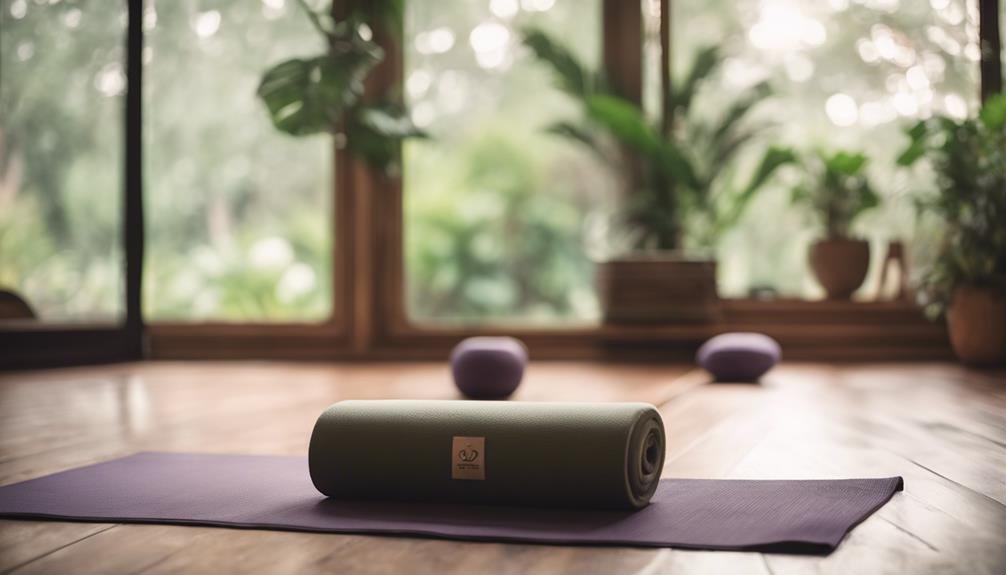
Let's carve out a serene oasis in our homes, setting up a dedicated yoga space that inspires mindfulness and tranquility. As we create our home yoga practice space, we'll focus on simplicity, functionality, and ambiance.
| Essential Elements | Tips and Ideas |
|---|---|
| Decluttering | Remove any distractions, and tidy up the area to create a peaceful atmosphere. |
| Calming Colors | Choose soothing hues like beige, blue, or green to promote relaxation. |
| Natural Light | Position your mat near a window to harness natural light and energy. |
| Comfortable Flooring | Invest in a good yoga mat and consider a soft, plush rug for comfort. |
| Minimal Decor | Add a few calming elements, like a plant or a serene art piece, to enhance the ambiance. |
Frequently Asked Questions
Can I Practice Yoga if I Have a Prior Injury or Chronic Pain?
Recognize concerns about practicing yoga with prior injuries or chronic pain, but with gentle flows and a focus on injury prevention, we can modify poses to accommodate our needs, ensuring a safe and beneficial practice.
How Often Should I Practice Yoga to See Noticeable Results?
"We find that consistency matters, so we aim to practice yoga at least 2-3 times a week, ideally at the same time daily, to see noticeable results, despite scheduling conflicts that try to throw us off track."
Can Yoga Help With Weight Loss or Is It Just for Flexibility?
We find that yoga can indeed aid in weight loss, as it helps burn calories and boosts fat burning, particularly with more intense styles like Vinyasa or Ashtanga, which get our hearts racing and sweat dripping.
Do I Need to Be Flexible to Start Practicing Yoga?
We've fallen prey to yoga stereotypes, believing flexibility is a prerequisite, but that's a myth; we're not intimidated, and neither should you – yoga is for every body, regardless of shape, size, or flexibility, so let's shatter those fearful misconceptions together.
Can I Modify Yoga Poses to Accommodate My Body Type or Size?
Can we truly love ourselves if we're worried about fitting into a specific yoga mold? Fortunately, yes, we can modify yoga poses to accommodate our body type or size, embracing body positivity and size inclusivity.
Conclusion
As we weave yoga into the fabric of our daily lives, our bodies and minds begin to unfold like a lotus flower, revealing strength, flexibility, and serenity. With these beginner yoga routines, we've laid the foundation for a home practice that nurtures body, mind, and spirit. Now, it's time to roll out our mats and let the journey unfold, one breath at a time.